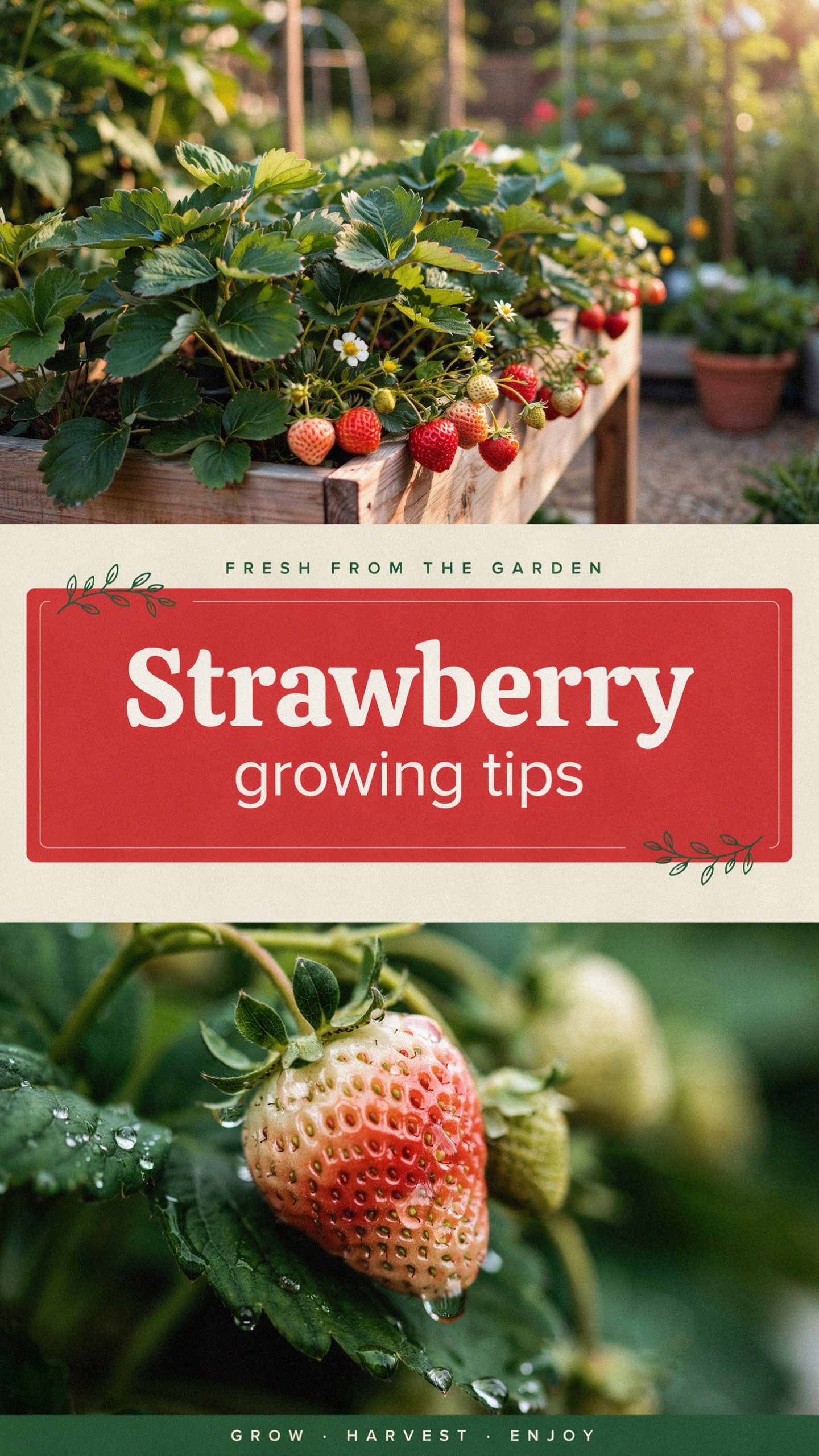

Imagine stepping into your garden and picking handfuls of ripe, sun-warmed strawberries straight from the plant. No more bland store-bought ones that taste like water. Just sweet, fragrant berries bursting with flavor that you grew yourself.
If you’re a beginner staring at a packet of plants or bare roots wondering where to start, you’re not alone. Many new gardeners struggle with poor yields, wilting plants, or fruits that never quite ripen right. The good news? Strawberries are forgiving and incredibly rewarding once you know the basics.
In this guide, I’ll walk you through everything with practical strawberry growing tips that actually work. Whether you have a backyard patch, raised beds, or just a sunny balcony, you’ll learn how to set up your plants for success from day one.
Quick Answer: Strawberry Growing Tips at a Glance
- Sunlight: 6–8+ hours of full sun daily.
- Soil: Slightly acidic (pH 5.5–6.8), well-draining, rich in organic matter.
- Watering: Consistent moisture — about 1–1.5 inches per week; keep soil evenly moist but not soggy.
- Spacing: 12–18 inches apart for most varieties.
- Best for beginners: Everbearing or day-neutral varieties for longer harvests.
- Key secret: Plant at the correct crown depth and mulch heavily.
Now, let’s dive deeper so you can enjoy baskets full of berries.
Choosing the Right Strawberry Varieties
One of the smartest strawberry growing tips is picking the right type for your space and goals. Not all strawberries behave the same.
June-bearing varieties produce one big flush of fruit in late spring or early summer. They’re great if you want to make jam or freeze a big batch at once.
Everbearing types give smaller harvests in spring and fall. They’re perfect for steady snacking throughout the season.
Day-neutral strawberries keep producing as long as temperatures stay between 35–85°F. Many beginners love these for reliable yields without strict seasonal timing.
Look for disease-resistant varieties suited to your climate. Ask at your local nursery or check extension service recommendations. In warmer areas, some need afternoon shade to avoid stress.
Preparing the Perfect Spot and Soil for Strawberries
Strawberries love sunshine and hate wet feet. Choose a spot that gets at least 6–8 hours of direct sun. More is better for sweeter fruit.
Test your soil pH if possible — aim for 5.5 to 6.8. Slightly acidic is ideal. If your soil is heavy clay or very sandy, raised beds or containers are your best friends.
Work in plenty of compost or well-rotted manure. This improves drainage, adds nutrients, and helps the soil hold just enough moisture. Remove all weeds before planting — strawberries have shallow roots and hate competition.
Pro tip from experience: I once skipped thorough weeding and spent the whole season battling grass in my berry patch. Learn from my mistake!
How to Plant Strawberries Correctly (The #1 Beginner Mistake)
Timing matters. Plant in early spring when the soil is workable, or in fall in milder climates.
Here’s the step-by-step:
- Dig holes twice as wide as the root ball but not deeper.
- Spread the roots out gently.
- Position the crown (where leaves meet roots) right at soil level. Too deep causes rot; too high leaves roots exposed.
- Backfill and firm the soil gently.
- Water deeply right after planting.
Space plants 12–18 inches apart in rows. In containers, use pots at least 8–10 inches deep with excellent drainage holes. One plant per smaller pot or several in a larger one.
For the first few weeks, keep the soil consistently moist as roots establish. This is crucial.
Watering Strategies That Make or Break Your Harvest
Strawberries have shallow roots, so they dry out fast. Inconsistent watering leads to small, woody berries or blossom end rot.
Aim for about one inch of water per week. In hot weather, check daily. Water at the base to keep leaves dry and reduce disease risk. Drip irrigation or soaker hoses work wonders.
Real-world observation: Mulch changes everything. Straw, pine needles, or shredded leaves keep soil cool, retain moisture, and prevent fruit from touching dirty ground. I use straw — it looks tidy and smells nice too.
Avoid overhead watering once plants are established. Wet foliage invites fungal problems.
Feeding Your Strawberry Plants for Bigger Berries
Strawberries aren’t super heavy feeders, but they appreciate balanced nutrition.
Before planting, mix in compost. After plants are growing well, use a balanced organic fertilizer. Switch to higher potassium (like tomato fertilizer) once flowering starts to boost fruit production.
For everbearing or day-neutral types, feed lightly every few weeks during the growing season. Over-fertilizing with nitrogen creates lots of leaves but fewer berries.
I like to side-dress with compost mid-season. It’s gentle and builds soil health over time.
Managing Runners and Keeping Plants Productive
Strawberries send out runners (long stems with baby plants). This is how they spread naturally.
For maximum fruit production, pinch off most runners the first year. This directs energy back to the mother plant. In year two, you can let some root to expand your patch or start new plants.
If you want a matted row system, space them to fill in nicely. Just don’t let the bed get overcrowded — it reduces airflow and invites disease.
Protecting Your Strawberries from Pests and Diseases
Common issues include slugs, birds, aphids, and fungal diseases like gray mold or powdery mildew.
- Birds: Use netting once fruits start coloring.
- Slugs: Hand-pick at night or use organic bait.
- Fungal problems: Good spacing, mulch, and dry leaves help a lot. Remove any diseased foliage promptly.
Choose resistant varieties and rotate your patch every few years to avoid soil-borne issues. Companion planting with herbs like thyme or borage can help attract beneficial insects.
Troubleshooting tip: Yellow leaves? Could be overwatering, nutrient deficiency, or pests. Check soil moisture first.
Harvesting and Enjoying Your Homegrown Strawberries
Pick berries when they’re fully red and fragrant. Twist gently or use scissors to avoid damaging the plant. Harvest every day or two during peak season — ripe fruit left on the plant can rot and attract pests.
Eat them fresh, freeze extras, or turn them into jam. Nothing beats the taste of warm berries picked minutes earlier.
After the main harvest for June-bearers, renovate the bed by mowing or trimming leaves, fertilizing lightly, and watering well. This sets them up for next year.
Growing Strawberries in Containers and Small Spaces
No yard? No problem. Strawberries thrive in pots, hanging baskets, or even window boxes.
Use quality potting mix (not garden soil). Choose everbearing varieties. Water more frequently since containers dry out faster. Elevate pots to improve airflow.
I’ve seen beautiful tower planters and strawberry pots that look decorative and produce well. Just ensure good drainage and sun exposure.
Seasonal Care and Overwintering Tips
In colder climates, mulch heavily in late fall to protect roots. Straw or leaves work great. Remove excess in spring to let new growth emerge.
In hot areas, provide afternoon shade and extra water during summer peaks.
Monitor for winter damage and replant as needed. Many patches last 3–5 years with good care.
Common Beginner Mistakes to Avoid
- Planting too deep or too shallow.
- Letting the patch get overcrowded.
- Inconsistent watering.
- Skipping mulch.
- Ignoring pH and drainage.
Fix these early and your success rate skyrockets.
Advanced Strawberry Growing Tips for Even Better Results
- Use row covers for earlier harvests or frost protection.
- Try hill planting or matted rows depending on your space.
- Save your own runners for free plants next season.
- Experiment with vertical growing if ground space is limited.
Pay attention to your local conditions — what works in one garden might need tweaking in another. That’s part of the fun.
FAQs About Strawberry Growing Tips
How long do strawberry plants produce fruit? Most productive for 3–5 years. Renovate beds annually and replace plants as they slow down. Everbearing types can give fruit the first year if planted early.
Why are my strawberries small or not sweet? Often due to insufficient sun, water stress, overcrowding, or poor soil. Boost sunlight, maintain even moisture, and fertilize appropriately for sweeter results.
Can I grow strawberries from seeds? Yes, but it’s slower and less reliable than buying plants or bare roots. Seeds need stratification (cold period) and may not match the parent variety.
What’s the best mulch for strawberries? Straw is classic — it keeps fruit clean and suppresses weeds. Pine needles or shredded leaves also work well and help maintain acidity.
How do I keep slugs and birds away? Netting for birds and beer traps or organic pellets for slugs. Hand-picking at dusk is surprisingly effective too.
Do strawberries need pollinators? Yes, bees and other insects help with pollination for better fruit set. Planting flowers nearby encourages them.
Can strawberries grow in shade? They tolerate partial shade but produce fewer and less sweet berries. Full sun is strongly recommended for best results.
Ready to Grow Your Own Sweet Strawberries?
There’s something deeply satisfying about harvesting your first bowl of homegrown strawberries. The taste, the pride, the connection to your garden — it’s addictive in the best way.
Start small if you’re nervous. A few plants in pots or a modest raised bed will teach you more than any guide. Pay attention, adjust as you go, and enjoy the process.
You’ve got this! Drop a comment below with your strawberry growing tips or questions — I’d love to hear how your patch turns out. Happy planting, and may your berries be plentiful and delicious.