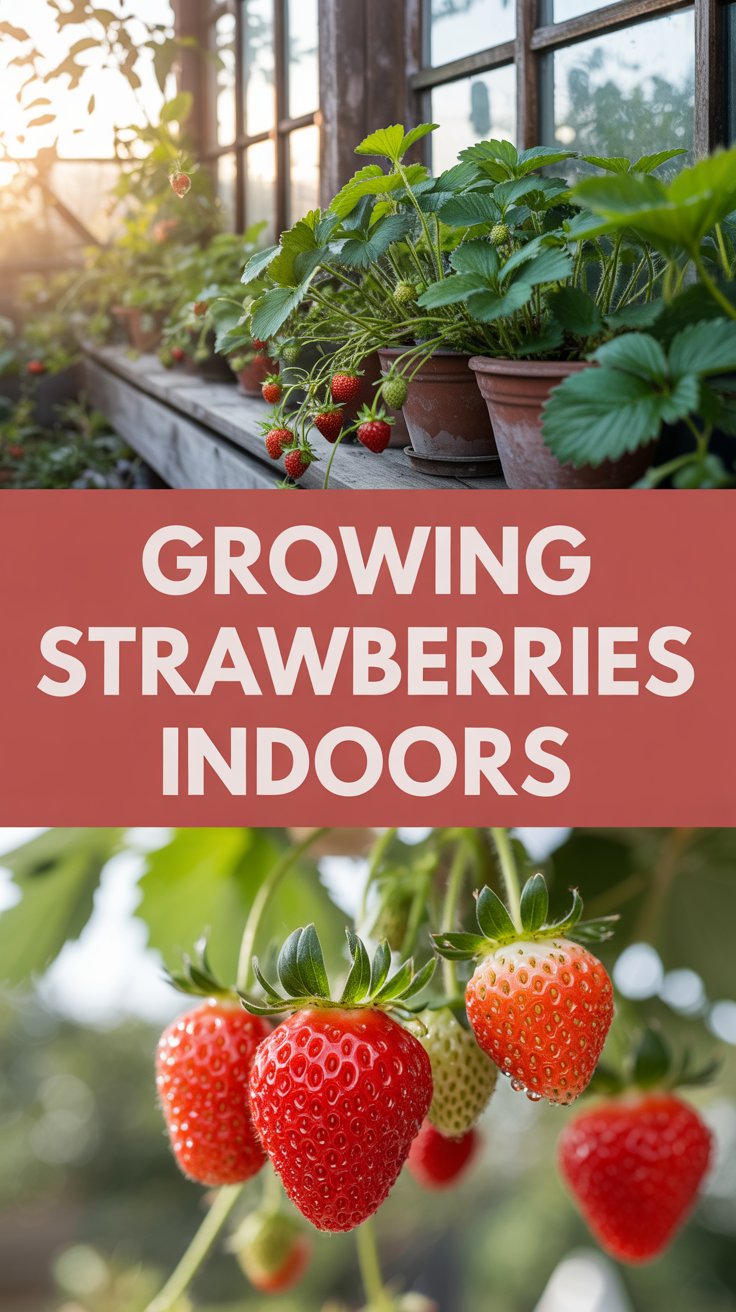

Imagine plucking ripe, juicy strawberries right from your windowsill in the middle of winter. No more waiting for summer or settling for bland store-bought berries. Growing strawberries indoors is easier than most people think, and it can turn even a small apartment into a productive little berry patch.
If you’ve ever killed a houseplant or felt overwhelmed by gardening, don’t worry. This guide walks you through everything step by step, with practical tips I’ve learned from trial and error (and plenty of sweet rewards along the way).
Quick Answers: Growing Strawberries Indoors
Can you grow strawberries indoors? Yes! With enough light, the right variety, and basic care, you can harvest fresh strawberries year-round.
How much light do they need? At least 6–8 hours of bright light daily, or 12–16 hours under grow lights.
Best varieties for indoors? Day-neutral types like Albion, Seascape, or Cabrillo. They produce fruit continuously rather than in one big flush.
How long until harvest? From established plants, you can see fruit in 60–90 days. Starting from seed takes longer.
Do they need bees for pollination? Not necessarily. You can hand-pollinate easily with a small brush.
Why Growing Strawberries Indoors Makes Perfect Sense
Strawberries are one of the most rewarding fruits for indoor gardeners. They’re compact, beautiful, and productive in small spaces. You control the environment, so pests and weather become much less of an issue.
Plus, homegrown berries taste infinitely better — sweeter, more aromatic, and picked at peak ripeness. Many people in apartments or cold climates now enjoy fresh strawberries even when snow covers the ground outside.
Choosing the Right Strawberry Varieties
Not all strawberries perform well indoors. June-bearing types need specific day lengths and are better for outdoor gardens.
Go for day-neutral or everbearing varieties. These keep producing flowers and fruit as long as conditions are good. Top picks include:
- Albion: Firm, flavorful, disease-resistant, and compact.
- Seascape: Large berries with excellent taste and strong production.
- Cabrillo: High yields with great flavor.
- Alpine strawberries: Tiny, intensely sweet fruits — perfect for very small spaces.
Start with bare-root plants or young seedlings from a reputable nursery for faster results. Seeds work too, but expect more patience.
What You’ll Need to Get Started
Gather these basics before you begin:
- 6–8 inch deep pots with good drainage holes (strawberries have shallow roots but like room to spread).
- High-quality potting mix — well-draining, slightly acidic (pH 5.5–6.5).
- Bright window (south-facing is ideal) or full-spectrum grow lights.
- Small fan for air circulation.
- Organic fertilizer suitable for fruiting plants.
- Spray bottle or watering can.
Optional but helpful: perlite or coco coir for extra drainage, and a humidity dome for starting seeds.
Step-by-Step: How to Plant Strawberries Indoors
- Prepare your pots. Fill with potting mix, leaving space at the top. Mix in a slow-release fertilizer if desired.
- Plant correctly. Place the crown (where roots meet leaves) right at soil level — not buried, not exposed too high. Burying the crown is a common beginner mistake that leads to rot.
- Water gently. Moisten the soil thoroughly after planting. Let excess drain.
- Position for light. Put in your brightest spot immediately.
- Give them time. New plants may focus on roots and leaves first. That’s normal.
I usually plant a few pots at once so I have a continuous supply rolling in.
Providing the Right Light for Fruit Production
Light is the biggest factor for indoor strawberries. They need full sun equivalent to produce sweet fruit.
South or west-facing windows work great. If natural light is limited, use LED grow lights. Position them 12–18 inches above plants and run for 12–16 hours daily.
Watch the leaves: pale or leggy growth means more light is needed. Dark green, compact plants with lots of flowers are happy.
Temperature, Humidity, and Airflow
Strawberries like daytime temps of 65–75°F (18–24°C) and cooler nights around 50–60°F. Avoid extremes — above 85°F or below 50°F can slow them down.
Moderate humidity (around 60%) is ideal. A small fan prevents stagnant air and reduces disease risk.
Watering and Feeding Your Indoor Strawberries
Keep soil consistently moist but never soggy. Stick your finger in the top inch — water when it feels dry.
Water at the base to keep leaves dry. Overwatering is one of the fastest ways to lose plants.
Fertilize every 2–4 weeks with a balanced or bloom-boosting organic fertilizer. Too much nitrogen gives you lush leaves but few berries.
The Magic of Pollination Indoors
Strawberries are self-fertile, but they still need help moving pollen. Without wind or insects, you become the bee.
Gently brush flowers with a small paintbrush or cotton swab every few days, transferring pollen from stamens to the center. Or lightly tap or rub flowers together. Do this in the morning when pollen is most viable.
It only takes a minute but makes a huge difference in fruit set.
Caring for Your Plants as They Grow
- Pinch early flowers on very young plants to build stronger roots and bigger future harvests.
- Manage runners. Indoors, remove most runners so energy goes to fruit instead of new plants (unless you want more pots).
- Mulch lightly with straw or coco coir to retain moisture and keep fruits clean.
- Rotate pots occasionally for even growth.
Common Problems and How to Fix Them
Even experienced growers face hiccups. Here’s what to watch for:
Yellow leaves: Often overwatering or nutrient deficiency. Check drainage and soil moisture first.
No flowers or fruit: Insufficient light is usually the culprit. Increase hours or intensity.
Small or sour berries: Needs more light, consistent moisture, or potassium-rich fertilizer.
Pests (aphids, spider mites): Inspect regularly. A gentle soap spray or neem oil usually handles them indoors.
Powdery mildew or rot: Improve airflow and avoid wetting leaves. Remove affected parts quickly.
Harvesting Your Indoor Strawberries
Pick berries when they’re fully red and slightly soft. Twist gently or use scissors.
Eat them right away for the best flavor — they don’t store like supermarket ones. You can also freeze extras for smoothies.
A healthy mature plant can produce dozens of berries over months.
Advanced Tips from a Fellow Indoor Gardener
- Grow multiple varieties for better pollination and flavor variety.
- Use self-watering pots if you travel often.
- In very small spaces, try hanging baskets or vertical planters.
- Experiment with hydroponics once you’re comfortable with soil.
I’ve found that talking to my plants (yes, really) and checking them daily builds that connection that makes gardening addictive in the best way.
Sustainable Practices for Your Indoor Berry Patch
Reuse pots and refresh soil between plantings. Compost kitchen scraps for homemade fertilizer. Growing your own food, even on a small scale, feels incredibly rewarding and reduces plastic waste from store packaging.
FAQs About Growing Strawberries Indoors
How many strawberry plants do I need for a good harvest? Start with 3–6 plants. Each can produce 50–150+ berries per year under good conditions, depending on variety and care.
Can I grow strawberries indoors without grow lights? Yes, if you have a very bright south-facing window with 6–8+ hours of direct sun. Many people succeed this way.
Do indoor strawberries come back every year? They’re perennials. With proper care, they can produce for 2–3 years or longer before needing replacement.
Why are my strawberry leaves turning brown? Could be underwatering, over-fertilizing, low humidity, or too much direct heat. Check watering routine and light distance.
Is it safe to eat strawberries grown indoors? Absolutely. You control what goes on them — no mystery pesticides. Just rinse before eating.
Can kids help with indoor strawberry growing? Yes! It’s a fantastic family project. Kids love planting, pollinating, and harvesting.
Final Thoughts: Your First Sweet Harvest Awaits
Growing strawberries indoors isn’t just about fresh fruit — it’s about bringing a little bit of nature and joy into your daily life. There’s something magical about watching tiny white flowers turn into red gems on your kitchen counter.
Start small, be patient with the learning curve, and celebrate every berry. Before long, you’ll be sharing your success (and maybe some runners) with friends.
Ready to begin? Grab a few plants or seeds this week. Your future self will thank you every time you taste that homegrown sweetness.
What are you waiting for? Go grow some strawberries indoors — and drop a comment with your results! I’d love to hear how your berry adventure goes.