
Imagine stepping into your backyard or onto your balcony and picking a crisp, fresh cucumber straight from the vine for your salad or pickles. It’s one of those simple joys that makes gardening addictive. But if you’re new to this, you might worry about yellowing leaves, bitter fruits, or plants that just won’t produce.
The good news? Growing cucumbers is straightforward once you know the basics. With the right timing, a bit of care, and some practical tips, you can enjoy a bountiful harvest even as a first-timer. I’ve grown them in raised beds, containers, and even small spaces, and I’m excited to share what works.
Quick Answer: How to Grow Cucumbers Successfully
- Best time: Plant after the last frost when soil reaches 65–70°F (18–21°C).
- Sunlight: Full sun, at least 6–8 hours daily.
- Soil: Rich, well-draining, pH 6.0–7.0, amended with compost.
- Watering: Keep soil consistently moist—about 1 inch per week, more in heat.
- Spacing: 12–36 inches apart, depending on variety and trellising.
- Harvest: Pick when 6–8 inches long for slicers, smaller for pickles—every 1–2 days.
- Days to harvest: 50–70 days typically.
Now, let’s dive deeper so you can set yourself up for success from seed to harvest.
Choosing the Right Cucumber Varieties
Not all cucumbers are the same. Picking the right type makes a huge difference for your space and goals.
Slicing cucumbers are perfect for fresh eating—think long, straight fruits like ‘Marketmore’ or ‘Straight Eight’. Pickling varieties stay smaller and crunchier, such as ‘Boston Pickling’ or ‘Calypso’. There are also bush types for containers and space-savers, plus burpless or parthenocarpic (seedless, no-pollination-needed) options for greenhouses.
Pro tip: Start with disease-resistant hybrids if you’ve had issues before. They’re more forgiving for beginners. I always grow a mix—one for snacking and one for pickles.
Understanding Cucumber Plant Needs
Cucumbers are warm-season lovers. They hate cold feet and inconsistent care. Give them warmth, sunshine, and steady moisture, and they’ll reward you generously.
These plants are heavy feeders and vigorous growers. Vining types can spread 6–8 feet or more, while bush varieties stay compact. Most produce both male and female flowers—males appear first, which is normal. Female flowers have a tiny cucumber at the base.
Preparing Your Soil and Site
Healthy soil is the foundation. Cucumbers thrive in fertile, well-drained loam that’s rich in organic matter.
Test your soil pH—it should be between 6.0 and 7.0. Work in plenty of compost or aged manure before planting. Raised beds or mounds help with drainage and warmth, especially in cooler climates. Avoid heavy clay that stays soggy.
Choose a spot with full sun. In very hot areas, afternoon shade can prevent wilting. Good air circulation helps reduce disease.
Beginner mistake to avoid: Planting in poor or compacted soil. Amend it generously—your future self (and plants) will thank you.
When and How to Plant Cucumbers
Timing is everything. Cucumbers are frost-tender, so wait until soil warms up.
Indoors: Start seeds 2–4 weeks before your last frost in peat pots or biodegradable containers (they dislike root disturbance). Sow ½–1 inch deep, on their side if possible. Keep at 70–85°F for quick germination.
Direct sowing: After the last frost and when soil is 65°F+, plant 4–6 seeds per hill or mound, 1 inch deep. Thin to the strongest 2–3 plants.
Space plants 12–24 inches apart in rows 3–5 feet apart, or closer if trellising vertically. For containers, use at least a 5–10 gallon pot per plant.
Harden off indoor seedlings gradually before transplanting. Plant in the evening and water well.
Caring for Your Growing Cucumber Plants
Consistent care keeps plants productive all season.
Watering: This is critical. Inconsistent moisture leads to bitter, misshapen fruits. Aim for deep, even watering at the base—avoid wetting leaves to prevent disease. Mulch heavily with straw or leaves to retain moisture and suppress weeds.
Fertilizing: Cucumbers are hungry. Side-dress with balanced fertilizer or compost tea every 2–3 weeks once vines start running. Too much nitrogen means lots of leaves but few fruits.
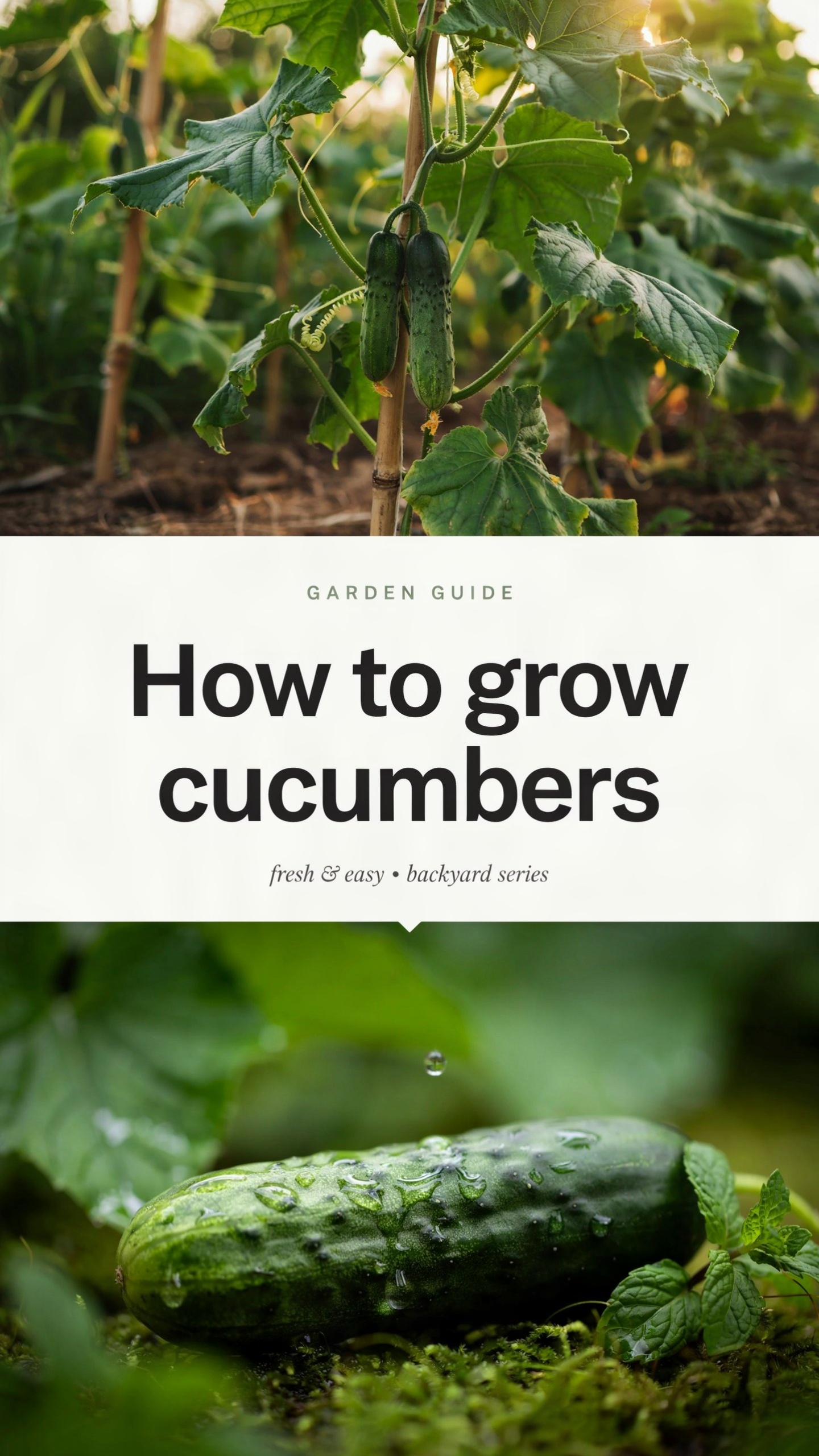
Trellising and Support: Train vines up a trellis, fence, or A-frame. This saves space, improves airflow, keeps fruits clean, and makes harvesting easier. Tie gently as they grow.
Pruning: Pinch off the first few flowers to encourage stronger roots. For greenhouse types, remove male flowers to prevent bitterness in some varieties.
Common Beginner Mistakes and How to Avoid Them
- Sowing too early → Seeds rot in cold soil. Wait for warmth.
- Inconsistent watering → Results in bitter cucumbers. Use mulch and check soil daily.
- Overcrowding → Leads to disease. Give them room or go vertical.
- Letting fruits get too big → Plant slows production. Harvest young and often.
- Poor pollination → Hand-pollinate with a brush if needed.
I’ve made most of these mistakes myself—learning the hard way is part of the fun, but you don’t have to!
Troubleshooting Common Problems
Even with good care, issues pop up. Here’s how to handle them.
Yellow leaves: Often nitrogen deficiency or overwatering. Check soil moisture and feed appropriately.
Bitter fruits: Stress from uneven water or heat. Keep watering consistent and choose burpless varieties.
Powdery mildew (white powder on leaves): Improve airflow, avoid overhead watering, and use a baking soda spray (1 tbsp per quart of water) as a mild treatment. Plant resistant varieties.
Cucumber beetles: These striped pests spread bacterial wilt. Use row covers early, hand-pick, or companion plant with nasturtiums or radishes.
Wilting plants: Could be bacterial wilt (remove and destroy) or simply dry soil. Check for pests.
No fruits: Wait for female flowers. Ensure pollinators or hand-pollinate.
Pests like aphids or spider mites: Blast with water or use insecticidal soap. Encourage beneficial insects.
Rotate crops yearly and clean up debris at season’s end to prevent buildup.
Harvesting Cucumbers the Right Way
This is the rewarding part! Harvest when fruits are firm, bright green, and the right size—usually 6–8 inches for slicers, 3–6 inches for pickles. Use scissors or a knife to cut, leaving a bit of stem.
Pick every day or two during peak season. Leaving overripe cucumbers (yellowing) signals the plant to stop producing. Store in the fridge for up to a week, or pickle them fresh for best crunch.
Personal note: There’s nothing like that first garden cucumber of the season—cool, crisp, and full of flavor you can’t buy.
Growing Cucumbers in Containers or Small Spaces
No yard? No problem. Bush varieties like ‘Salad Bush’ or ‘Bush Pickle’ do great in large pots.
Use quality potting mix with compost, ensure excellent drainage, and water more frequently since containers dry out faster. Trellis or let them cascade over edges. Fertilize regularly.
Vertical growing maximizes small spaces beautifully.
Extending Your Cucumber Harvest
For a longer season, make successive plantings every 2–3 weeks. In hot climates, provide afternoon shade during peak summer.
At the end of the season, you can sometimes extend by protecting plants with row covers if cooler weather threatens.
FAQs About Growing Cucumbers
How long does it take to grow cucumbers from seed? Most varieties are ready in 50–70 days. Pickling types often mature faster.
Why are my cucumbers bitter? Usually due to stress from inconsistent watering, heat, or nutrient issues. Keep soil evenly moist and harvest promptly.
Can I grow cucumbers indoors or in a greenhouse? Yes! Choose parthenocarpic varieties that don’t need pollination. Provide strong light, warmth, and good ventilation.
What’s the best way to support cucumber plants? Trellising is ideal. It saves space and reduces disease. Use sturdy supports like bamboo, netting, or cattle panels.
Do cucumbers need full sun? Yes, at least 6–8 hours. In extreme heat, some afternoon shade helps prevent wilting.
How often should I water cucumber plants? Deeply when the top inch of soil feels dry—usually every few days, more in hot weather. Consistency is key.
Are there companion plants that help cucumbers? Nasturtiums, marigolds, and radishes can deter pests. Beans add nitrogen. Avoid planting near potatoes or aromatic herbs that might stunt growth.
Final Thoughts: Enjoy the Crunch of Your Own Cucumbers
There’s real satisfaction in growing your own food. Cucumbers are one of the most rewarding crops for beginners because they grow fast and produce abundantly when happy. You’ll go from a few nervous seedlings to overflowing baskets in just a couple of months.
Start small, pay attention to water and warmth, and don’t be afraid to experiment. Your garden (and your kitchen) will thank you. If you try this guide, I’d love to hear how your harvest turns out—drop a comment with your favorite variety or any tips you discover along the way.
Ready to get your hands dirty? Grab some seeds, prep that soil, and watch those vines take off. Happy growing!