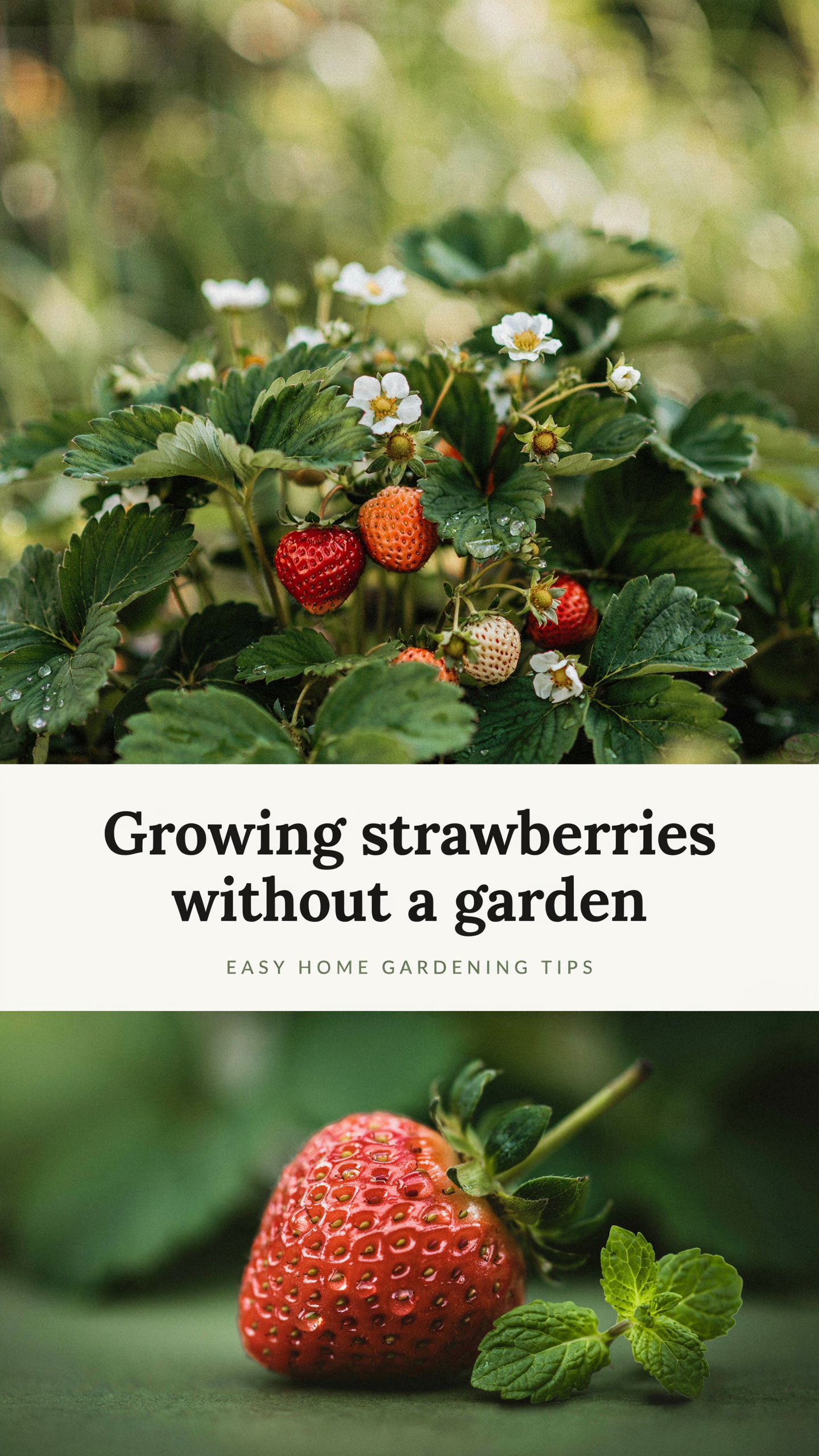

Imagine stepping onto your balcony or patio on a sunny morning, reaching out, and popping a warm, juicy strawberry straight into your mouth. No supermarket trip needed. The flavor explodes—sweet, tangy, and far better than anything from the store.
If you’ve always wanted to grow your own strawberries but thought you needed a big backyard, I’ve got great news for you. Growing strawberries without a garden is not only possible—it’s surprisingly easy and incredibly rewarding. Whether you have a tiny apartment balcony, a sunny windowsill, or just a concrete patio, you can harvest fresh berries right at home.
In this guide, I’ll walk you through everything as your friendly, slightly obsessed strawberry-growing neighbor. We’ll cover simple setups, the best varieties, step-by-step planting, care tips, common mistakes to dodge, and troubleshooting. By the end, you’ll feel confident turning any small space into your personal strawberry patch.
Quick Answer: Can You Really Grow Strawberries Without a Garden?
Yes! Use containers, hanging baskets, vertical towers, or even window boxes. Choose day-neutral or everbearing varieties for the longest harvest. Give them at least 6–8 hours of sun, well-draining potting mix, and consistent moisture. Many beginners harvest their first berries within months.
Why Growing Strawberries Without a Garden Makes Perfect Sense
Strawberries are one of the most forgiving and productive fruits for small spaces. They have shallow roots, so they thrive in pots rather than deep garden soil. You can move containers to chase the sun or protect them from bad weather.
Vertical growing saves ground space and brings plants up to eye level—easier on your back and great for keeping slugs away. Plus, the fruit stays cleaner off the ground.
I started my own container strawberries on a small deck years ago. That first handful of berries tasted like victory. Now it’s a summer tradition I look forward to every year.
Best Strawberry Varieties for Container Growing
Not all strawberries perform the same in pots. Focus on these types:
- Day-neutral varieties: Produce fruit steadily from spring through fall as long as temperatures stay moderate. Excellent for continuous harvests. Top picks: Albion, Seascape, Tristar.
- Everbearing: Give you a big flush early, a break, then another later. Good options: Ozark Beauty, Quinault, Fort Laramie.
- Alpine strawberries: Tiny, intensely flavorful berries. Runnerless and perfect for edging pots or hanging baskets. Try Alexandria.
Avoid vigorous June-bearing types if space is tight—they send out lots of runners and need more room.
Pro tip: Start with nursery plants or bare-root crowns rather than seeds for faster results. You’ll get berries the first season.
Choosing the Right Containers and Setups
The beauty of growing strawberries without a garden is the flexibility.
Basic pots: Go for wide, shallow containers at least 8–12 inches deep and 10–16 inches wide. Strawberries spread horizontally. Plant 2–3 per larger pot.
Hanging baskets: Great for trailing varieties. They save floor space and look beautiful, but check moisture twice daily in heat.
Vertical towers and stacked planters: My favorite for maximizing yield. Systems like GreenStalk or DIY stacked pots can hold 15–30+ plants in a tiny footprint.
Window boxes and rail planters: Perfect for balconies. Secure them well against wind.
Other creative ideas: Grow bags, PVC pipe towers, pallet walls, or even repurposed gutters. Ensure good drainage everywhere.
Whatever you choose, make sure there are plenty of drainage holes. Strawberries hate soggy roots.
Preparing the Perfect Soil Mix
Never use straight garden soil in containers—it compacts and stays too wet.
Mix your own or buy quality potting mix:
- Well-draining potting soil or coco coir base
- Compost for nutrients
- Perlite or pumice for aeration
Aim for slightly acidic pH (5.5–6.8). Add a handful of slow-release organic fertilizer at planting.
This light, airy mix keeps roots happy and prevents rot.
Step-by-Step: How to Plant Strawberries in Containers
- Gather supplies: Pots, mix, plants, mulch (straw or fabric), fertilizer.
- Fill containers: Add mix, leaving room at the top. Mix in fertilizer.
- Position plants: Place the crown (where leaves meet roots) exactly at soil level. Too deep = rot. Too high = drying out.
- Space them: Give each plant room to breathe—don’t overcrowd.
- Water gently: Soak thoroughly until it drains out the bottom.
- Add mulch: Keeps fruit clean and moisture even.
- Place in sun: 6–8+ hours of direct sunlight daily. Rotate pots for even growth.
That’s it! New growth should appear quickly.
Daily and Seasonal Care for Thriving Plants
Watering: Keep soil consistently moist but not waterlogged. Check daily in summer—containers dry fast. Water at the base to avoid wetting leaves and fruit.
Feeding: Use a balanced liquid fertilizer every 2–3 weeks during growth. Ease up when fruiting heavily.
Pollination: Outdoors, bees do the work. Indoors or on windy balconies, gently shake plants or use a soft brush.
Managing runners: Pinch most runners the first year to focus energy on fruit. Save a few for new plants later.
Overwintering: In cold climates, move pots to a garage or sheltered spot. Or treat as annuals and replant fresh each spring.
Vertical Growing: Maximizing Your Small Space
Vertical setups are game-changers for growing strawberries without a garden. Towers, wall pockets, and hanging systems let you grow dozens of plants in just a few square feet.
Water from the top so it trickles down. Use drip irrigation if possible for even moisture. Choose compact varieties and monitor upper levels—they dry faster.
I’ve seen balconies transformed into living strawberry walls. It’s productive and gorgeous.
Common Beginner Mistakes (and How to Avoid Them)
- Burying the crown too deep.
- Using heavy garden soil.
- Inconsistent watering (leads to small or malformed berries).
- Not enough sunlight.
- Overcrowding plants.
- Ignoring pests like slugs or birds.
Learn from these, and your success rate skyrockets.
Troubleshooting Common Problems
Yellow leaves: Often nutrient deficiency or overwatering. Check drainage and feed appropriately.
No flowers/fruit: Too little sun, extreme heat (>85°F), or too much nitrogen.
Moldy fruit: Improve air circulation, water at base, and mulch.
Pests: Hand-pick slugs, use netting for birds, or companion plant with herbs.
Small berries: Inconsistent water or too many fruits per plant. Thin if needed.
Observe your plants daily—they’ll tell you what they need.
Harvesting and Enjoying Your Homegrown Strawberries
Pick berries when fully red and slightly soft. Morning is best. Twist gently to avoid damaging the plant.
Eat fresh, make jam, freeze for smoothies, or bake into treats. Nothing beats the satisfaction of growing your own.
Store extras in the fridge for a few days or freeze them.
Extending Your Strawberry Season
With day-neutral varieties and good care, you can enjoy berries for months. Succession planting and moving pots to optimal spots help too. In mild climates, some setups produce almost year-round with protection.
Sustainable Tips for Long-Term Success
Reuse containers, compost kitchen scraps for fertilizer, and save runners for free new plants. This keeps costs low and the garden eco-friendly.
FAQ: Growing Strawberries Without a Garden
How many strawberry plants do I need for a family? Start with 10–20 plants. Day-neutral types in vertical systems can provide plenty for fresh eating and some extras.
Can I grow strawberries indoors year-round? Yes, with strong grow lights (full-spectrum LED) and good airflow. Day-neutral varieties work best. Expect lower yields than outdoors.
What’s the best fertilizer for container strawberries? Balanced organic liquid fertilizer or slow-release granules. Avoid high-nitrogen options that encourage leaves over fruit.
Do strawberries come back every year in pots? They can for 2–4 years with good overwintering, but many treat them as annuals for best production. Refresh soil yearly.
How do I protect strawberries from birds and slugs? Use bird netting or row covers. Elevate plants in containers or vertical systems to reduce slug access. Copper tape or beer traps also help.
Is growing strawberries without a garden worth it? Absolutely. The flavor, freshness, and joy far outweigh the small effort.
Final Thoughts: Your Strawberry Adventure Awaits
Growing strawberries without a garden opens up a world of fresh, homegrown sweetness no matter where you live. It’s more than just food—it’s connection to nature, a bit of pride, and those unforgettable moments sharing berries with family and friends.
Start small. Pick one or two pots and a few good plants. Watch them grow, taste your first harvest, and you’ll be hooked.
Grab some containers, head to your local nursery, and get planting. I’d love to hear how your strawberry journey goes—drop a comment below with your setup or first harvest story.
Here’s to many baskets of beautiful, juicy berries from your own small-space garden. Happy growing!