
Have you ever walked out to your garden only to find your beautiful tomato plants sprawled across the ground, stems cracked, and fruits rotting on the soil? You’re not alone. Many beginner gardeners watch their tomatoes grow vigorously… then struggle under their own weight.
Staking tomato plants changes everything. It keeps plants upright, improves airflow, reduces disease, and makes harvesting a pleasure instead of a back-breaking chore.
In this guide, I’ll walk you through everything you need to know about staking tomato plants — from why it matters to exactly how to do it, even if you’ve never grown tomatoes before.
Quick Answer: How to Stake Tomato Plants
Staking tomato plants involves supporting the main stem and branches using stakes, cages, or trellises. Start when plants are 12–18 inches tall. Use sturdy stakes or cages driven 8–12 inches into the ground. Tie plants loosely with soft ties every 6–8 inches as they grow. This simple step can double your harvest while preventing many common problems.
Now let’s dive deeper.
Why Staking Tomato Plants Matters More Than You Think
Tomato plants are surprisingly heavy. A single indeterminate variety can produce 20+ pounds of fruit. Without support, stems bend and snap, especially after rain or wind.
When plants lie on the ground, several bad things happen:
- Fruits touch damp soil and rot faster
- Leaves stay wet longer, inviting fungal diseases like blight
- Air circulation drops, creating perfect conditions for pests
- Harvesting becomes messy and damaging to the plant
Properly staked tomatoes grow stronger, produce more fruit, and stay healthier throughout the season. I’ve seen the difference in my own garden — staked plants consistently outperform unstaked ones by a wide margin.
When Should You Start Staking Tomato Plants?
Timing is everything. Wait too long and the plant gets tangled and stressed. Start too early and you risk damaging young stems.
Best time: When your tomato seedlings reach about 12–18 inches tall and have their first set of true leaves beyond the seed leaves.
In most climates, this happens 3–5 weeks after transplanting. Keep an eye on your plants — once they start leaning or the first flower clusters appear, it’s time to stake.
Materials You’ll Need for Staking Tomato Plants
You don’t need fancy equipment. Here’s what works well:
- Wooden stakes (1×1 or 1×2 inch, 6–8 feet tall)
- Metal T-posts or rebar (very sturdy option)
- Tomato cages (wire or sturdy round/square)
- Soft plant ties, twine, strips of old t-shirts, or velcro ties
- Hammer or mallet for driving stakes
- Pruners for clean cuts
I prefer a mix of methods depending on the variety. Cherry tomatoes often do great in cages, while large beefsteak types benefit from strong single stakes or trellising.
Different Methods for Staking Tomato Plants
There’s no single “best” way. Here are the most popular approaches:
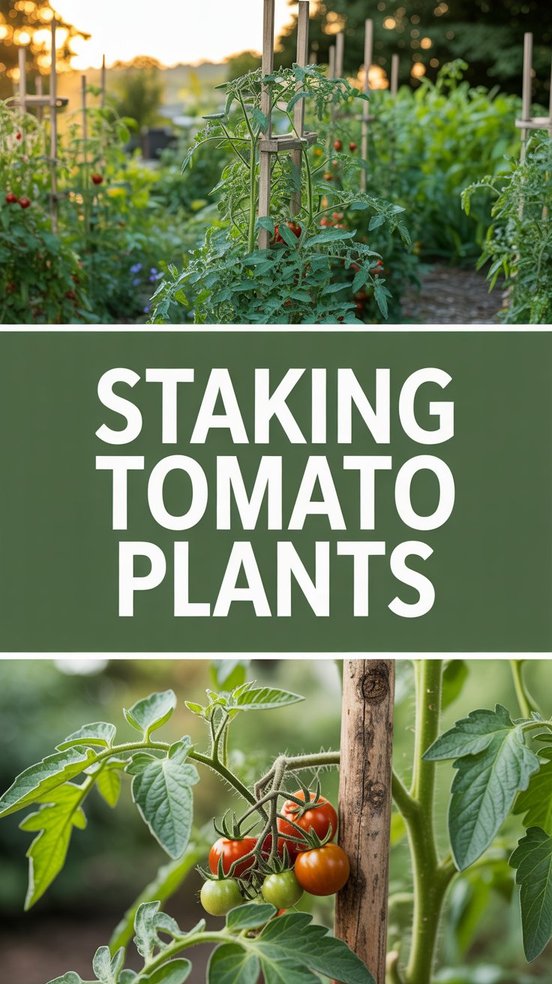
1. Single Stake Method Drive one sturdy stake about 4–6 inches from the main stem. As the plant grows, tie the main stem to the stake every 6–8 inches. Simple and effective for smaller gardens.
2. Tomato Cage Method Place a wire cage around each plant right after transplanting. This works especially well for determinate varieties that grow more compactly.
3. Florida Weave (Double Stake) Great for row planting. Place stakes between plants and weave twine back and forth to create support that grows with the plants.
4. Trellis or String Support String vertical lines from a top wire or overhead support down to each plant. This is my favorite for maximizing space in raised beds.
5. Cattle Panel Trellis For serious gardeners — bend sturdy cattle panels into arches or straight trellises. These last for years and support massive plants.
Step-by-Step: How to Stake Tomato Plants Properly
Here’s exactly how I do it in my garden:
- Prepare your supports early — Install stakes or cages before the plants get too big. This prevents root damage.
- Position carefully — Place stakes 4–6 inches away from the main stem on the side opposite prevailing winds.
- Drive deep — Sink stakes at least 8–12 inches into the ground. In windy areas, go 18 inches.
- Tie gently — Use figure-eight loops around the stem and stake. Never tie too tightly — stems need room to grow.
- Prune as you go — Remove suckers (side shoots) regularly when using single stakes. This focuses energy on fewer, stronger stems.
- Check weekly — As plants grow, add new ties higher up. Adjust existing ties that become too tight.
Pro Tips from Years of Growing Tomatoes
Over time, I’ve picked up some insights that make staking easier:
- Use old pantyhose or soft fabric strips — they stretch and won’t cut into stems.
- Stake in the morning when plants are less brittle.
- Mulch heavily around the base after staking to retain moisture and reduce weeds.
- Consider the variety. Indeterminate tomatoes need strong, tall supports. Determinate types do fine with shorter cages.
- Leave some space between ties. Plants need gentle movement to develop strong stems.
Common Beginner Mistakes When Staking Tomato Plants
Even experienced gardeners slip up sometimes. Here are the mistakes I see most often:
- Tying too tightly (this girdles stems and restricts growth)
- Waiting until plants fall over
- Using flimsy stakes that bend under weight
- Forgetting to check ties after heavy rain or wind
- Over-pruning while staking (some foliage protects fruit from sunscald)
Troubleshooting Common Staking Problems
Plants leaning heavily to one side? Add extra ties or an additional stake for support. Sometimes wind or heavy fruit loads cause this.
Stems cracking at tie points? Loosen the ties immediately and use softer material next time.
Fruits still touching the ground? Add lower supports or prune bottom leaves and suckers.
Cages collapsing? Reinforce with extra stakes inside or outside the cage. Cheap wire cages often need help.
How Staking Affects Tomato Flavor and Production
Supported plants get better sunlight and air movement. This means:
- Faster ripening
- Sweeter, more concentrated flavor
- Fewer split fruits
- Reduced chance of blossom end rot (better calcium uptake)
In my experience, well-staked plants produce cleaner, more uniform fruit with better taste.
Organic and Sustainable Staking Ideas
You don’t need to buy everything new. Try these creative options:
- Use sturdy branches pruned from trees
- Repurpose old fence posts
- Grow tomatoes near existing structures (fences, arbors)
- Save and reuse cages year after year
Seasonal Care After Staking Tomato Plants
Staking isn’t a “set it and forget it” task. Throughout the season:
- Keep tying as plants grow taller
- Remove yellowing lower leaves
- Water consistently at the base
- Watch for signs of disease and act quickly
- Harvest regularly to lighten the load on stems
FAQ: Staking Tomato Plants
How tall should tomato stakes be? Aim for 6–8 foot stakes. You’ll need about 2–3 feet in the ground and enough height for the full-grown plant plus room to tie.
Can you stake tomato plants too late? Yes. If plants are already sprawling, carefully lift them and provide support. Some stems may be damaged, but the plant can usually recover.
Is it better to stake or cage tomatoes? It depends on the variety. Indeterminate tomatoes often do better with stakes or trellises. Determinate bush types work well in cages.
How often should you tie tomato plants? Check every 7–10 days. Tie new growth as it appears, roughly every 6–8 inches up the stem.
Do cherry tomatoes need staking? Most do. While smaller, cherry tomato vines can become very heavy and sprawl wildly without support.
What’s the best material for tying tomato plants? Soft, stretchy materials like old t-shirts, pantyhose, or special garden velcro ties. Avoid wire or thin string that cuts stems.
Can you use bamboo for staking tomato plants? Absolutely. Bamboo is strong, renewable, and looks attractive in the garden.
Final Thoughts on Staking Tomato Plants
There’s something deeply satisfying about walking through your garden and seeing tall, upright tomato plants heavy with ripening fruit. Staking tomato plants is one of those small investments that delivers huge returns in both beauty and harvest.
You don’t need a perfect system on your first try. Start simple — maybe with basic stakes and soft ties — and adjust as you learn what works in your garden.
Your future self (and your taste buds) will thank you when you’re harvesting basket after basket of gorgeous, blemish-free tomatoes instead of picking through fallen vines.
Ready to transform your tomato patch? Grab some stakes and get out there. Your best harvest yet is waiting.
What tomato varieties are you growing this season? Drop a comment below — I’d love to hear about your garden!