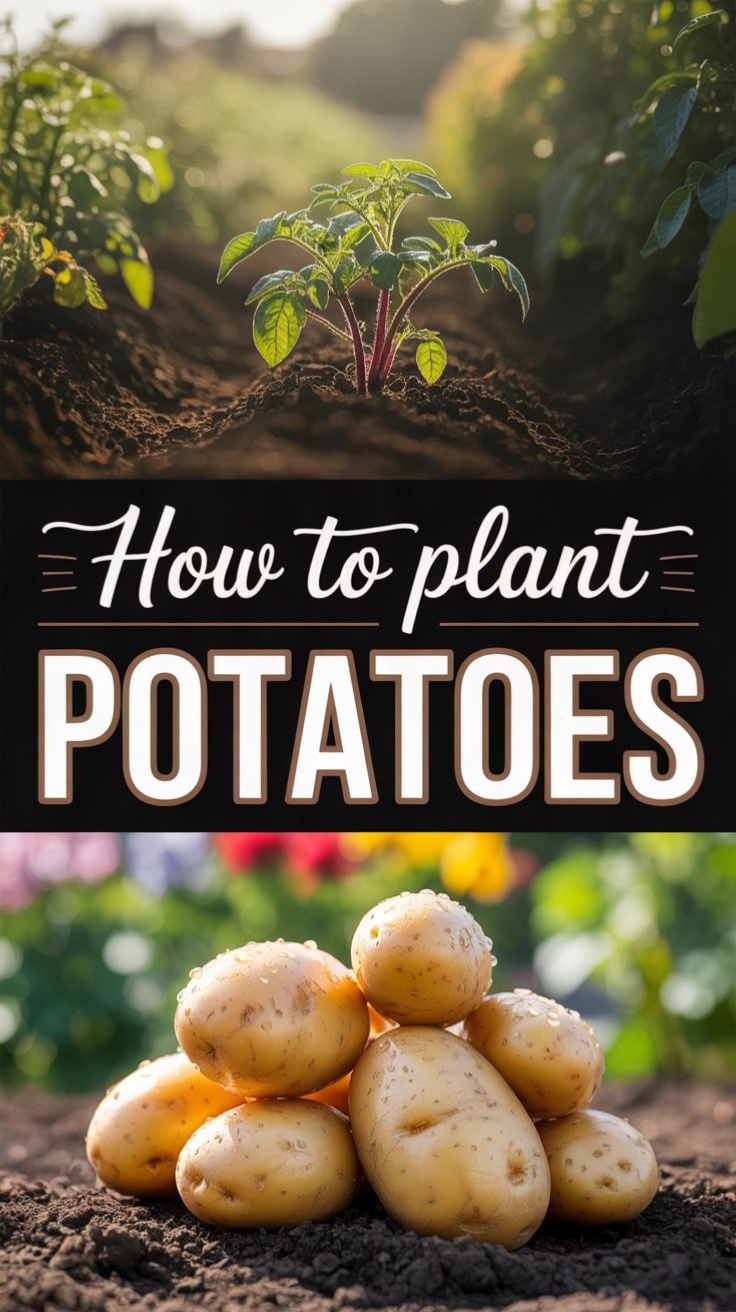

Imagine pulling up a handful of fresh, earthy potatoes from your own garden soil. They taste nothing like the ones from the store—creamy, flavorful, and incredibly satisfying. If you’re new to gardening and dreaming of growing your own spuds, you’re in the right place.
Many beginners feel overwhelmed by the process. What if the potatoes rot? How deep do you plant them? Don’t worry. Planting potatoes is straightforward, forgiving, and one of the most rewarding crops for home gardeners. In this guide, I’ll walk you through everything step by step, from choosing your seed potatoes to harvesting your first crop.
Quick Answer: How to Plant Potatoes
- Best time: 2–4 weeks before your last frost, when soil is at least 45–55°F.
- Method: Plant seed potatoes (or pieces with eyes) 4–6 inches deep, 12 inches apart, in rows 30–36 inches apart.
- Key steps: Chit (sprout) them first, plant eyes up, hill soil as they grow, and keep consistent moisture.
- Harvest: 10–20 weeks later, when foliage yellows and dies back.
Now, let’s dive deeper so you can succeed from the very first try.
Why Growing Your Own Potatoes Is Worth It
Potatoes are a staple crop that’s surprisingly easy for beginners. They don’t need fancy equipment or perfect conditions—just decent soil, sunlight, and a bit of care.
One potato plant can yield 5–10 pounds or more of fresh tubers. That’s real food security and money saved at the grocery store.
Plus, there’s something magical about digging up potatoes. Kids love it, and you’ll feel like a true gardener when your harvest basket overflows.
Choosing the Right Potato Varieties for Beginners
Not all potatoes are created equal. Pick varieties based on your space, climate, and taste preferences.
Early varieties mature quickly (75–90 days) and are great for short seasons:
- Yukon Gold — versatile, buttery yellow flesh.
- Red Norland or Dark Red Norland — early reds with good flavor.
Mid-season options offer balance:
- Kennebec — excellent keeper, disease-resistant.
- Fingerling types like Russian Banana for gourmet appeal.
Late varieties give bigger yields but need longer seasons. Try Elba if you want a reliable workhorse.
Start with certified seed potatoes from a reputable supplier. Avoid grocery store potatoes—they may be treated to prevent sprouting and could carry diseases.
When to Plant Potatoes
Timing is everything. Plant too early in cold, wet soil and they may rot. Too late and yields drop.
Aim for 2–4 weeks before your average last frost date. Soil temperature should hit at least 45°F at night and ideally 55°F daytime.
In warmer climates, you might plant as early as February. In cooler areas, March or April works well. In fall (southern hemisphere or mild winters), time it 3 months before first frost.
Pro tip: Use a soil thermometer. It’s cheap and takes the guesswork out.
Preparing Your Soil and Site
Potatoes love loose, well-draining soil. Heavy clay leads to misshapen tubers and rot.
Choose a spot with at least 6–8 hours of full sun. Avoid areas where tomatoes, peppers, or eggplants grew recently to prevent disease buildup.
Soil prep tips:
- Work in plenty of compost or well-rotted manure.
- Aim for slightly acidic pH (5.8–6.5).
- Loosen the soil 8–12 inches deep.
- Raised beds or containers are excellent if your ground is poor.
I once tried planting in compacted soil. The potatoes came out small and knobby. Lesson learned—fluffy soil makes all the difference.
Chitting (Sprouting) Your Seed Potatoes
Chitting gives your potatoes a head start and stronger plants.
Place seed potatoes in a cool, bright spot (around 50–60°F) for 2–4 weeks before planting. Egg cartons work great—eyes facing up.
You’ll see short, sturdy sprouts emerge. This reduces rot risk and speeds up growth by 1–2 weeks.
If your seed potatoes are large, cut them into pieces with 2–3 eyes each. Let cuts callus over for a day or two to prevent rotting.
Step-by-Step: How to Plant Potatoes
Here’s the simple process I use every season:
- Dig trenches or holes — Make them 4–6 inches deep. Rows should be 30–36 inches apart.
- Place seed potatoes — Set them 12 inches apart, eyes (sprouts) facing up. For larger tubers, give a bit more space.
- Cover lightly — Add 3–4 inches of soil initially. Don’t bury them too deep at first.
- Water gently — Moisten the soil without soaking it.
You can also use containers, grow bags, or even straw methods for no-dig gardening.
The Magic of Hilling Potatoes
Hilling is my favorite part. As plants grow 6–8 inches tall, mound soil or compost around the stems, leaving just the top leaves exposed.
Repeat every couple of weeks. This encourages more tubers to form along the buried stems and prevents light from turning potatoes green (which makes them bitter and slightly toxic).
Hilling also helps with weed control and drainage.
Watering, Feeding, and Ongoing Care
Potatoes need consistent moisture—about 1–2 inches per week. Inconsistent watering causes cracked or hollow tubers.
- Water deeply but less frequently.
- Mulch with straw or leaves to retain moisture and suppress weeds.
- Feed with a balanced or low-nitrogen fertilizer. Too much nitrogen gives lush leaves but few potatoes.
Keep an eye on pests like Colorado potato beetles. Hand-pick them off early.
Common Beginner Mistakes to Avoid
Even experienced gardeners slip up sometimes. Here are the big ones:
- Planting grocery store potatoes — They often won’t sprout well and may spread disease.
- Planting too close — Crowded plants compete and produce smaller harvests.
- Forgetting to hill — Exposed tubers turn green.
- Overwatering or poor drainage — Leads to rot.
- Harvesting too early — Wait until foliage dies back for mature tubers.
Another mistake? Ignoring soil temperature. Cold soil is a recipe for disappointment.
Troubleshooting Common Potato Problems
Yellow leaves or stunted growth: Could be underwatering, nutrient deficiency, or disease. Check moisture first.
Blight: Dark spots on leaves. Remove affected plants quickly and choose resistant varieties next time.
Small tubers: Not enough sun, poor soil, or insufficient hilling.
Pests: Colorado potato beetles and wireworms are common. Rotate crops and use row covers if needed.
Green potatoes: Too much light exposure. Hill properly and store in dark.
Most issues are preventable with good soil, timing, and observation. Don’t panic—gardening is learning by doing.
Growing Potatoes in Containers or Small Spaces
No big yard? No problem.
Use 5–10 gallon grow bags or buckets with drainage holes. Plant 1–3 seed potatoes per container. Hill by adding soil as they grow until the container is full.
This method works beautifully on patios or balconies. Just keep them watered daily in hot weather.
When and How to Harvest Potatoes
Harvest time brings pure joy.
For new potatoes (small and tender), gently dig around plants after flowering.
For main harvest, wait until foliage turns yellow and dies back (usually 10–20 weeks). Cut back tops, wait a few days, then dig carefully with a fork.
Work on a dry day. Brush off soil and let tubers cure in a dark, cool spot for 1–2 weeks before storing.
Storing Your Homegrown Potatoes
Store in a cool (45–50°F), dark, well-ventilated place. Paper bags or crates work better than plastic.
Check regularly and remove any sprouting or soft ones. Properly cured potatoes can last months.
Sustainable and Organic Tips
- Rotate crops yearly.
- Use compost tea for natural feeding.
- Companion plant with beans or marigolds for pest control.
- Save your own seed potatoes only from healthy, disease-free plants.
Growing organically connects you deeper to the process and produces cleaner food.
FAQ: How to Plant Potatoes
How deep do you plant potatoes? Usually 4–6 inches deep initially, with more soil added as they grow through hilling.
Can I grow potatoes from store-bought ones? It’s possible but not recommended. They may not sprout well and can introduce diseases. Use certified seed potatoes instead.
How long do potatoes take to grow? Early varieties: 75–90 days. Main crop: 100–130 days or more.
Do potatoes need full sun? Yes, at least 6–8 hours daily for best yields.
What’s the best soil for potatoes? Loose, well-draining, slightly acidic soil rich in organic matter. Avoid fresh manure.
Why are my potatoes green? Exposure to sunlight. Always keep tubers covered with soil.
Can I plant potatoes in summer? In cooler climates, yes for a fall crop. In hot areas, they struggle above 80–85°F.
Final Thoughts: Your First Potato Harvest Awaits
There’s nothing quite like the pride of serving potatoes you grew yourself. Whether you have a big backyard or just a few containers, following these steps will set you up for success.
Start small this season. Learn as you go. Next year, you’ll be the one sharing tips with friends.
Ready to get your hands dirty? Grab some seed potatoes, prepare that soil, and enjoy the journey. Your future self (and dinner table) will thank you.
Drop a comment below with your favorite potato variety or any questions—I’d love to hear how your garden grows! Happy planting