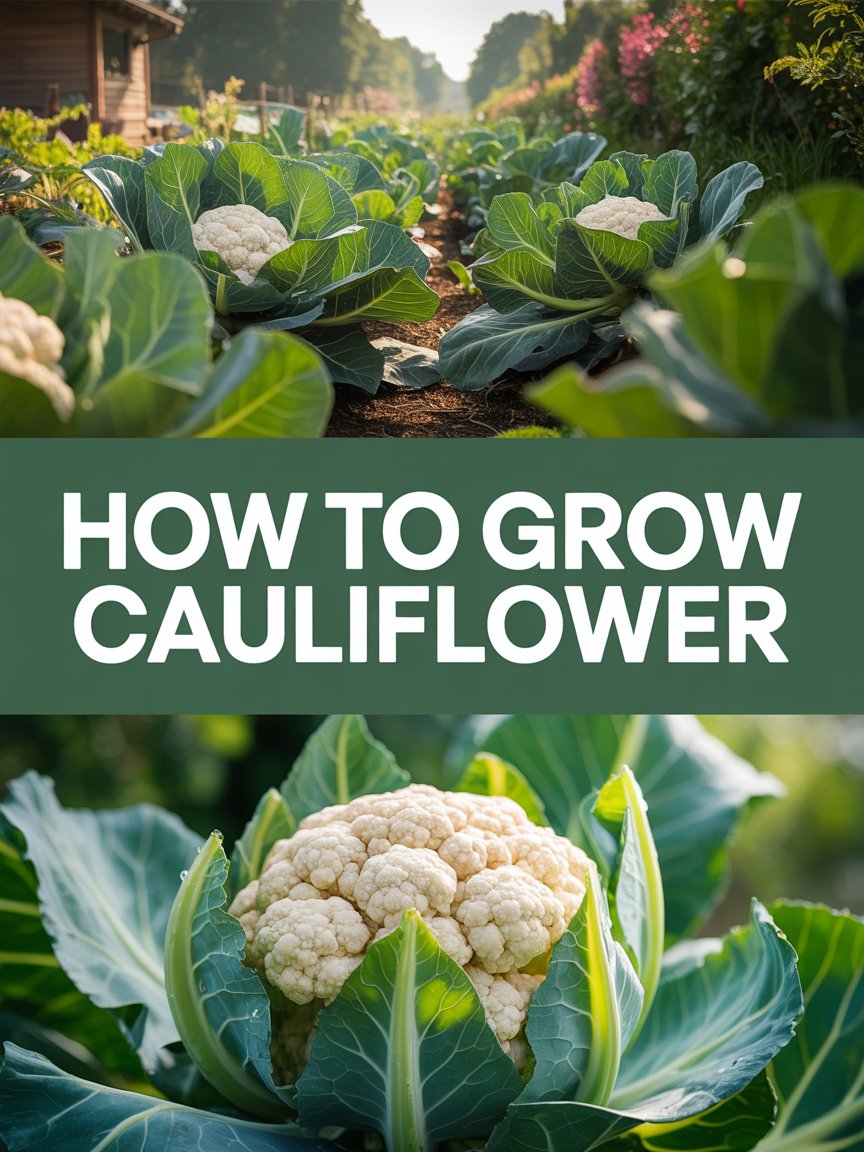

Imagine pulling a perfect, snow-white (or vibrant purple or orange) head of cauliflower from your own garden. It looks restaurant-worthy, tastes incredibly fresh, and you grew it yourself. But many beginners get frustrated when their plants form tiny “buttons” instead of big heads or bolt in the heat.
If that sounds familiar, you’re not alone. Cauliflower can be a bit picky, but with the right timing and care, it’s totally doable—even for new gardeners. In this guide, I’ll walk you through everything step by step so you can enjoy a successful harvest.
Quick Answer: How to Grow Cauliflower Successfully
- Best time: Cool weather (around 60–70°F). Plant in early spring for summer harvest or mid-to-late summer for fall harvest.
- Sun: Full sun (6–8 hours).
- Soil: Rich, well-drained, pH 6.0–7.5, high in organic matter.
- Spacing: 18–24 inches apart, rows 2–3 feet apart.
- Days to harvest: 50–100 days depending on variety.
- Key secret: Consistent moisture and temperature—no big swings.
Now, let’s dive deeper so you can set yourself up for success.
Why Cauliflower Is Worth Growing (Even If It’s Tricky)
Cauliflower is packed with vitamins, fiber, and antioxidants. It’s incredibly versatile in the kitchen—roast it, rice it, mash it, or turn it into steaks. Homegrown versions often taste sweeter and more tender than store-bought ones because you harvest at peak freshness.
The plant itself is fascinating: that creamy head is actually a cluster of undeveloped flower buds. Give it the cool, steady conditions it loves, and it rewards you generously.
Choosing the Right Cauliflower Varieties for Your Garden
Picking the right variety makes a huge difference, especially for beginners.
Classic white varieties:
- ‘Snow Crown’ — Early, reliable, great for spring.
- ‘Snowball’ — Self-blanching options available, good heirloom choice.
Colorful options (easier, no blanching needed):
- ‘Graffiti’ or ‘Violet Queen’ — Purple, stunning in the garden.
- ‘Cheddar’ — Orange, sweeter flavor, high in beta-carotene.
- Green or Romanesco types for fun, unique shapes.
Look for heat-tolerant or bolt-resistant hybrids if your summers warm up quickly. Start with a shorter-season variety (50–70 days) if you’re new to this.
When and Where to Plant Cauliflower
Cauliflower is a cool-season crop that hates extremes. It thrives when daytime temperatures stay in the 60s°F during head formation.
Spring planting: Start seeds indoors 4–6 weeks before your last frost. Transplant outdoors 2–4 weeks before the last frost, when soil has warmed a bit.
Fall planting (often easier and more flavorful): Sow in mid-to-late summer so heads mature as temperatures cool in autumn.
Choose a sunny spot with good air circulation. Avoid areas where brassicas (cabbage, broccoli, kale) grew in the last 2–3 years to prevent disease buildup.
Preparing the Soil for Strong, Healthy Plants
Cauliflower is a heavy feeder. Poor soil is one of the top reasons for disappointment.
Test your soil pH—aim for 6.0–7.5. Work in plenty of compost or well-rotted manure several weeks before planting. This improves drainage while helping the soil hold moisture.
Loosen the soil to at least 8–12 inches deep. Add a balanced fertilizer or organic amendments according to your soil test. Good drainage is crucial—waterlogged roots lead to problems fast.
How to Start Cauliflower from Seed (Step-by-Step)
Many gardeners buy transplants, but starting from seed gives you more variety options and saves money.
- Fill seed trays or small pots with moist, sterile seed-starting mix.
- Sow seeds ¼–½ inch deep, 2–3 seeds per cell.
- Keep soil at 70–75°F for germination (usually 4–10 days).
- Provide bright light—grow lights are ideal.
- Thin to the strongest seedling per cell once true leaves appear.
Harden off seedlings for 7–10 days before transplanting by gradually exposing them to outdoor conditions.
Transplanting and Spacing Your Cauliflower
Transplant when seedlings have 4–6 true leaves and are about 4–6 inches tall. Space plants 18–24 inches apart in rows 24–36 inches apart. This gives them room to grow those big leaves and heads.
Plant slightly deeper than they were in their pots if they’re leggy. Water deeply right after planting and firm the soil gently around the roots. Mulch around plants to keep soil cool and moist while suppressing weeds.
Watering: The Make-or-Break Factor
Consistent moisture is non-negotiable. Inconsistent watering causes stunted heads or bolting.
Aim for about 1–1.5–2 inches of water per week, including rainfall. Water deeply but infrequently—drip irrigation or soaker hoses work great.
Check soil moisture by sticking your finger an inch or two down. It should feel like a wrung-out sponge. Mulch helps tremendously here.
Feeding Your Cauliflower Plants
Side-dress with nitrogen-rich fertilizer or compost tea every 3–4 weeks during early growth. Avoid high-nitrogen feeds once heads start forming, as it can encourage leafy growth over heads.
Boron and calcium are important micronutrients—deficiencies cause hollow stems or brown curds. Compost and occasional seaweed extract help.
Blanching: How to Keep Heads White and Beautiful
For white varieties, blanching protects the head from sun and keeps it creamy.
When the head (curd) is about 2–3 inches across, gently pull outer leaves over it and secure with a rubber band or twine. Check periodically. Colorful varieties don’t need this step.
Common Beginner Mistakes to Avoid
- Planting too early or late → temperature swings cause buttoning (tiny heads).
- Letting soil dry out → stressed plants bolt or form small heads.
- Overcrowding → poor air flow leads to disease.
- Skipping hardening off → transplant shock.
- Not rotating crops → pest and disease buildup.
Take it slow and observe your plants—they’ll tell you what they need.
Pest and Disease Management the Natural Way
Common issues include cabbage worms, root fly, aphids, and clubroot.
- Use row covers early on.
- Hand-pick caterpillars.
- Companion plant with herbs like dill or marigolds.
- Keep the garden clean and practice good rotation.
Healthy, unstressed plants in rich soil resist problems better.
Troubleshooting Common Cauliflower Problems
Buttoning: Tiny heads form early. Caused by cold stress on young plants or heat. Prevention is best—time planting carefully.
Bolting: Plant sends up a flower stalk. Usually temperature fluctuations. Harvest what you can and replant.
Ricey or loose heads: Heat during formation or calcium issues. Harvest earlier next time.
Brown curds: Sunburn (improve blanching) or boron deficiency.
No head at all: Often immaturity, nutrient shortage, or drought. Be patient and consistent.
Harvesting Your Cauliflower at the Perfect Time
Cut heads when they’re full, firm, and about 6–8+ inches across, before the curds start separating. Use a sharp knife and leave some stem and leaves attached if storing.
Harvest in the morning for best quality. Side shoots may produce smaller secondary heads on some varieties.
Store in the fridge in a loose plastic bag for up to a week, or blanch and freeze for longer.
Growing Cauliflower in Containers
Yes, it’s possible! Choose compact varieties and pots at least 12–18 inches deep and wide. Use high-quality potting mix enriched with compost. Water and feed more frequently since containers dry out faster.
Extending Your Season with Succession Planting
Sow a few seeds every couple of weeks for a staggered harvest. Combine spring and fall plantings for the longest supply.
Real-World Tips from the Garden
In my experience, fall crops often outperform spring ones because the cooling weather aligns perfectly with head formation. Don’t be afraid to experiment with colorful varieties—they’re more forgiving and beautiful in the garden.
Observe daily during head formation. A little extra attention then pays off hugely.
FAQ: How to Grow Cauliflower
How long does it take to grow cauliflower? Most varieties take 50–100 days from transplant to harvest. Shorter-season types are best for beginners.
Why won’t my cauliflower form a head? Common causes: temperature too high/low, inconsistent water, low nutrients, or planting immature seedlings. Focus on steady, cool conditions.
Can you grow cauliflower in hot climates? Yes, with heat-tolerant varieties, afternoon shade, and careful timing for fall harvest. It’s trickier but possible.
Do all cauliflower varieties need blanching? No. White ones usually do for best color; purple, orange, and green types develop color in the sun naturally.
What’s the best fertilizer for cauliflower? Balanced organic fertilizer at planting, then nitrogen side-dressings early on. Compost is your friend throughout.
How do you prevent cauliflower from bolting? Maintain consistent moisture, avoid temperature swings, and choose appropriate varieties for your season.
Final Thoughts: Your First Successful Cauliflower Harvest Awaits
Growing cauliflower might feel intimidating at first, but once you nail the timing and consistency, it becomes one of the most rewarding crops in the garden. There’s something deeply satisfying about harvesting that big, beautiful head you nurtured from a tiny seed.
Start small this season, learn from your plants, and celebrate every success—even the mini heads taste great roasted! Grab some seeds or transplants, prepare that rich soil, and get planting. Your future self (and dinner table) will thank you.
Have you tried growing cauliflower before? Drop your tips or questions in the comments—I’d love to hear how it goes for you. Happy gardening!