
Have you ever bitten into a store-bought cucumber and thought, “This tastes like nothing”?
That was the moment I decided to grow my own. And honestly? It changed everything.
Cucumbers are one of those vegetables that taste wildly different when you grow them yourself — crisp, juicy, and full of flavor. But if you’ve never planted them before, the whole process can feel a bit overwhelming.
Don’t worry. Learning how to plant cucumbers is much simpler than most people think, and by the end of this guide, you’ll know exactly what to do — from choosing the right seeds to harvesting your first batch.
Let’s dig in. 🌱
Quick Answer: How to Plant Cucumbers (At a Glance)
If you’re in a hurry, here’s the short version:
- When: After the last frost, when soil is at least 60–70°F (16–21°C)
- Where: Full sun, well-drained soil
- How deep: Sow seeds 1 inch deep
- Spacing: 36–60 inches apart for vining types; 12 inches for bush types
- Days to germinate: 3–10 days
- Days to harvest: 50–70 days after planting
That’s the snapshot. Now let’s walk through everything step by step.
Why Cucumbers Are Worth Growing (Even for Beginners)
Cucumbers are one of the most rewarding crops you can grow.
They grow fast. They produce a lot. And they don’t ask for much in return.
Once established, a single cucumber plant can give you dozens of fruits over a season. That’s a serious return on a tiny investment of time and money.
They’re also incredibly versatile — eat them fresh, pickle them, toss them in salads, or blend them into smoothies. The garden-to-table gap is often less than 60 days.
Choosing the Right Cucumber Variety
Before you figure out how to plant cucumbers, you need to decide which cucumber to plant.
There are two main categories:
Slicing Cucumbers
These are the long, smooth ones you find in salads. They’re great for fresh eating.
Popular varieties include:
- Straight Eight – a classic, reliable producer
- Marketmore 76 – disease-resistant and beginner-friendly
- English (Telegraph) – thin-skinned, mild flavor
Pickling Cucumbers
Shorter, bumpier, and designed to hold up in brine.
- National Pickling – easy to grow, prolific
- Calypso – excellent disease resistance
- Boston Pickling – an old-fashioned favorite
Bush vs. Vining Cucumbers
This matters for your space.
Vining cucumbers spread out or climb a trellis. They produce more fruit but need more room.
Bush cucumbers stay compact — perfect for raised beds, containers, or smaller gardens.
If you’re short on space, go bush. If you have room to spread, go vining on a trellis to save ground space and improve airflow.
When to Plant Cucumbers
Timing is everything with cucumbers.
They are warm-season vegetables and absolutely hate frost. Plant too early and the cold will stunt or kill them.
Outdoor Planting
Wait until:
- All danger of frost has passed
- Soil temperature is at least 60°F (16°C) — ideally 70°F (21°C)
- Nighttime temperatures stay consistently above 50°F (10°C)
In most of the northern hemisphere, that means late spring — typically May to early June.
Starting Indoors
You can get a head start by sowing seeds indoors 2–4 weeks before your last frost date.
Use biodegradable pots since cucumbers don’t like having their roots disturbed during transplanting.
How to Plant Cucumbers: Step-by-Step
Now for the part you came here for. Here’s exactly how to plant cucumbers from seed.
Step 1: Choose Your Location
Cucumbers need full sun — at least 6–8 hours of direct sunlight daily.
They also need good drainage. Sitting in waterlogged soil is one of the fastest ways to kill a cucumber plant.
Avoid low-lying spots in your garden where water pools after rain.
Step 2: Prepare the Soil
Cucumbers love loose, fertile, well-draining soil with a pH between 6.0 and 7.0.
Here’s how to prep it:
- Loosen the soil to about 12 inches deep
- Mix in 2–4 inches of compost or aged manure
- If your soil is heavy clay, add perlite or coarse sand to improve drainage
- Rake the surface smooth
Good soil prep at this stage pays dividends all season long.
Step 3: Plant in Mounds or Rows
You have two main options: mounds or rows.
Mounds (hills) are the traditional cucumber planting method. Create small raised mounds about 12 inches wide and 3–4 inches high.
Plant 4–6 seeds per mound, then thin to the 2–3 strongest seedlings once they sprout.
Space mounds 36–60 inches apart for vining types, or 24 inches apart for bush varieties.
Rows work well if you’re planting next to a trellis or fence. Sow seeds every 6 inches, then thin to 12 inches apart after germination.
Step 4: Sow the Seeds
Plant seeds 1 inch deep.
Cover lightly with soil and press down gently to ensure good soil contact.
Water immediately after planting — gently, so you don’t wash the seeds away.
Step 5: Water Consistently
Cucumbers are mostly water (literally — they’re about 96% water), so consistent moisture is non-negotiable.
Give them 1 inch of water per week, more during hot spells.
Water at the base, not overhead. Wet leaves invite fungal diseases.
A soaker hose or drip irrigation system is ideal if you have one.
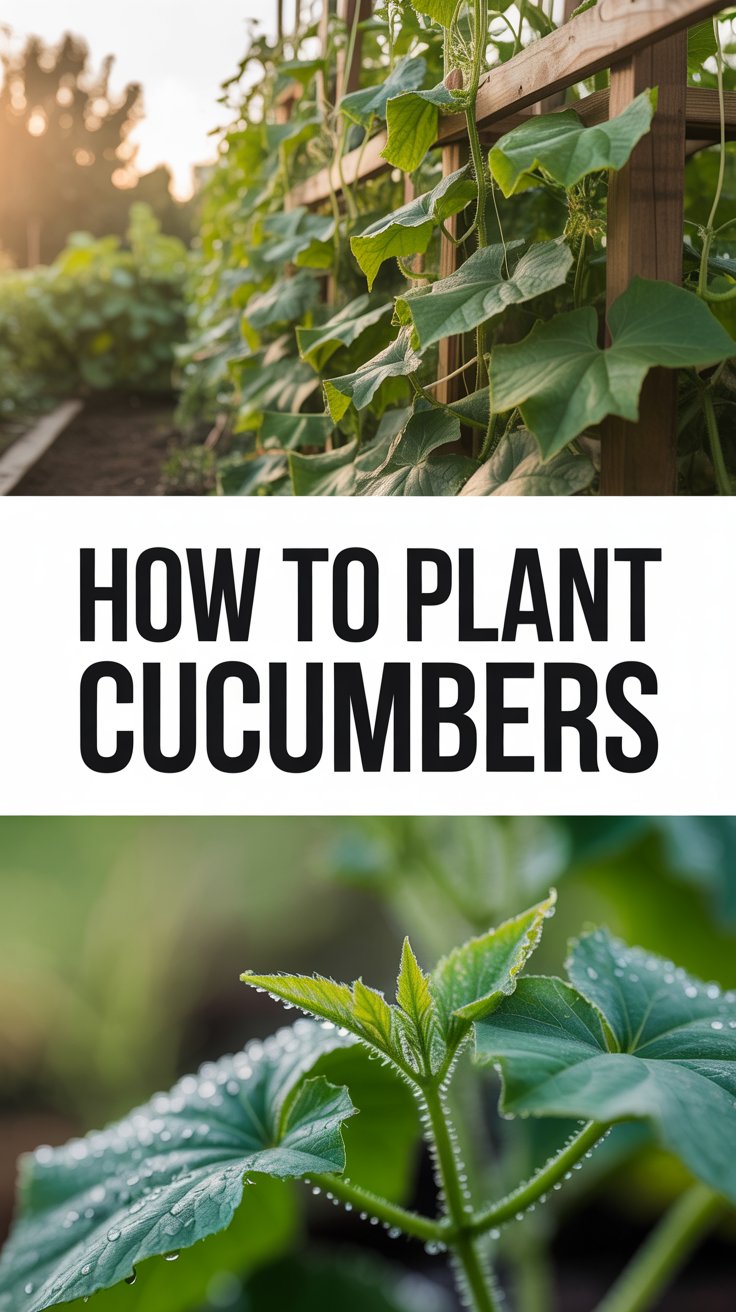
Step 6: Set Up Support (for Vining Types)
If you’re growing vining cucumbers, install your trellis, cage, or stake at planting time — before the vines start spreading.
Trying to add support later often damages the roots.
A simple A-frame trellis or wire fence works beautifully. Vines will naturally grab on with their tendrils.
Growing vertically also improves air circulation, reduces disease pressure, and makes harvesting much easier.
Caring for Your Cucumber Plants
Planting is just the beginning. Here’s what to do after the seeds sprout.
Fertilizing
Cucumbers are moderate to heavy feeders.
Start with a balanced fertilizer (like 10-10-10) when the plants are young.
Once flowering begins, switch to a fertilizer higher in potassium and phosphorus to support fruit development. Avoid too much nitrogen at this stage — it pushes leafy growth over fruit.
Mulching
Lay 2–3 inches of straw or wood chip mulch around the base of your plants.
Mulch keeps the soil moist, regulates temperature, and suppresses weeds. It also prevents soil from splashing onto leaves, which reduces disease risk.
This one small step makes a surprising difference.
Pollination
Cucumber plants produce separate male and female flowers on the same plant.
Male flowers appear first and won’t produce fruit — don’t panic when the first flowers drop.
Female flowers follow and have a tiny cucumber-shaped bulge at the base.
Bees and other pollinators do the heavy lifting. To attract them, avoid using pesticides when flowers are open, and consider planting some flowers nearby.
If pollination is poor (fruit forms but shrivels up), you can hand-pollinate by transferring pollen from a male to a female flower using a small brush.
Common Beginner Mistakes (And How to Avoid Them)
Even seasoned gardeners have made these mistakes. Learn from them now.
Planting too early. Cold soil causes seeds to rot instead of germinate. Be patient and wait for warm soil.
Overwatering. Soggy roots are just as bad as dry ones. Water deeply but let the soil partially dry between waterings.
Planting too close together. Crowded plants have poor airflow and are more prone to disease. Give them space.
Ignoring the trellis. Cucumbers left to sprawl on the ground are more vulnerable to pests and rot. Train them upward.
Letting cucumbers over-mature. A cucumber left too long on the vine turns yellow, tastes bitter, and signals the plant to stop producing. Pick regularly!
Troubleshooting Cucumber Problems
Even with the best care, things sometimes go sideways. Here are the most common issues and quick fixes.
Yellowing Leaves
Usually a sign of nitrogen deficiency or overwatering. Check your watering schedule and add a balanced fertilizer.
Bitter-Tasting Cucumbers
Often caused by heat stress, inconsistent watering, or leaving fruit on the vine too long. Keep watering consistent and harvest on time.
No Fruit Setting
Could be a pollination problem. Are bees visiting? If not, try hand-pollinating. Also check that you have both male and female flowers present.
Powdery Mildew
A white, powdery coating on leaves. Improve airflow, avoid wetting leaves, and treat with a neem oil or baking soda spray.
Cucumber Beetles
Small yellow-green beetles that chew on leaves and spread disease. Use row covers early in the season, remove by hand, or use neem oil.
When and How to Harvest Cucumbers
This is the best part.
Most slicing cucumbers are ready when they’re 6–8 inches long and uniformly dark green.
Pickling cucumbers are harvested smaller — around 2–4 inches for gherkins, or up to 6 inches for larger pickles.
Use scissors or a sharp knife to cut the stem rather than pulling. Pulling can damage the vine and reduce future yields.
Check your plants every day or two during peak season. Cucumbers grow fast — a missed cucumber can go from perfect to overripe in just 48 hours.
The more you harvest, the more the plant produces. It’s one of gardening’s most satisfying feedback loops.
Frequently Asked Questions About Planting Cucumbers
How deep do you plant cucumber seeds?
Plant cucumber seeds 1 inch deep in warm, well-draining soil. Planting too shallow can cause them to dry out; too deep may slow germination.
How many cucumber seeds should I plant per hole?
Plant 3–4 seeds per hole or mound. Once they germinate and reach a few inches tall, thin to the 2 strongest seedlings by snipping the others at soil level — don’t pull them out, as this can disturb the roots.
How long does it take cucumbers to grow from seed to harvest?
Most cucumber varieties take 50–70 days from planting to first harvest. Starting seeds indoors can shave off a week or two in cooler climates.
Can you grow cucumbers in pots or containers?
Absolutely. Choose a container at least 12 inches deep and wide, use a quality potting mix, and opt for a compact bush variety like Patio Snacker or Bush Pickle. Container cucumbers may need more frequent watering.
Do cucumbers need full sun?
Yes. Cucumbers need at least 6–8 hours of direct sunlight per day to thrive and produce well. In partial shade, they’ll grow but produce far less fruit.
How often should you water cucumber plants?
Water deeply once or twice a week, aiming for about 1 inch of water per week. During hot, dry spells, water more frequently. Always water at the base of the plant to keep leaves dry and reduce disease risk.
What should I plant next to cucumbers?
Cucumbers grow well alongside beans, peas, radishes, sunflowers, and nasturtiums. Avoid planting them near sage or potatoes, which can inhibit their growth.
Final Thoughts: Your First Cucumber Harvest Is Closer Than You Think
Here’s what I want you to take away from all of this:
You can do this.
Knowing how to plant cucumbers doesn’t require gardening expertise, fancy equipment, or a huge garden. It requires warm soil, a sunny spot, a little water, and some patience.
The first time you walk out to your garden and spot a plump cucumber hanging from the vine that you grew — trust me, it feels amazing. There’s a quiet pride in it that you don’t expect until it happens.
So grab some seeds, prep that soil, and get planting. Your summer salads are going to taste better than ever.
And if this guide helped you, share it with a fellow beginner gardener who might need it too. Happy growing! 🥒