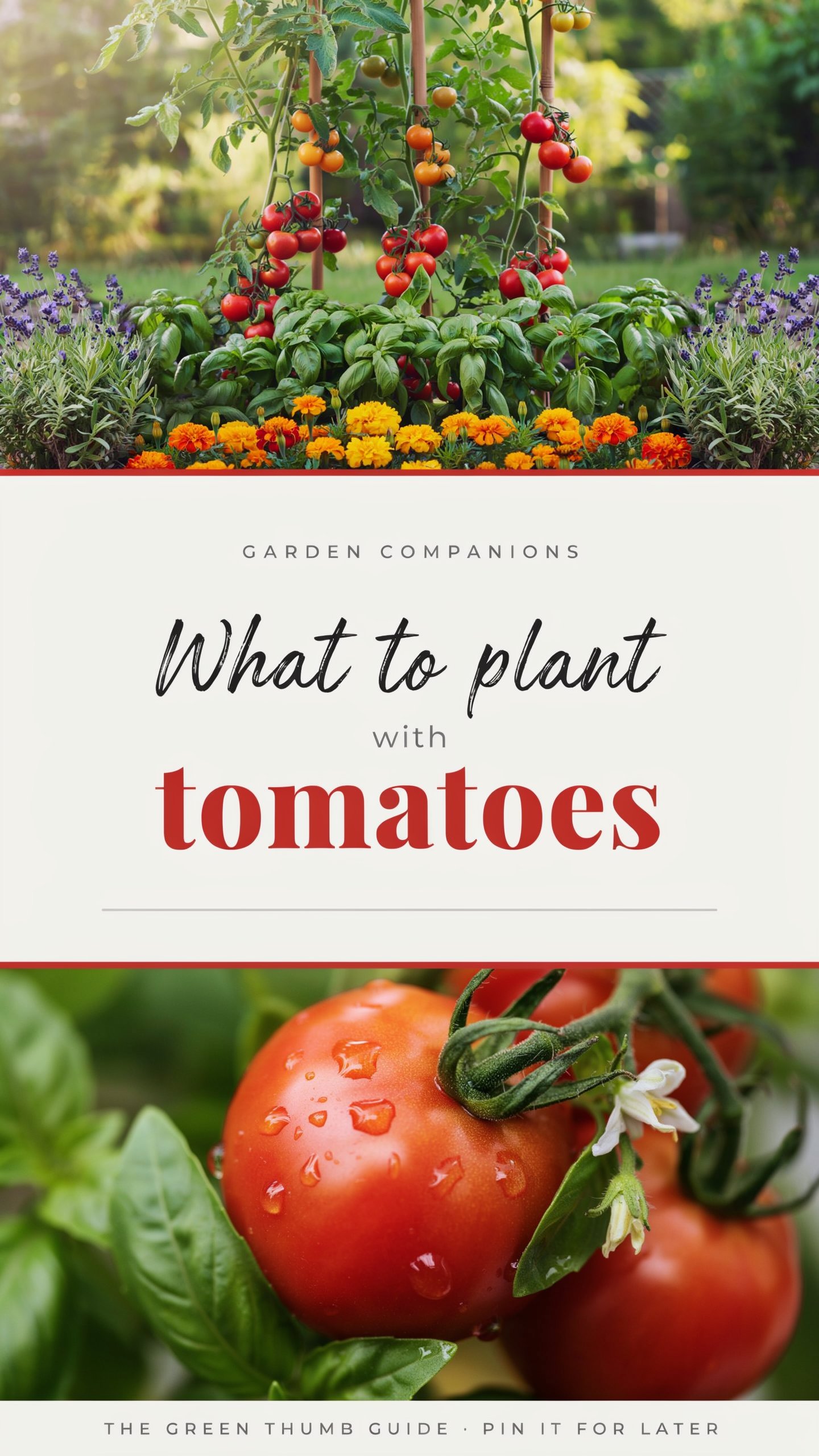

Picture this: It’s mid-summer, and your tomato plants are loaded with plump, juicy fruits. No hornworms munching leaves. Fewer aphids. Vibrant green foliage. And the best part? Your garden smells amazing, like fresh basil and marigolds every time you walk by.
If you’re a beginner gardener staring at your tomato seedlings wondering how to make them happier and more productive, you’re not alone. Many new growers struggle with pests, diseases, and disappointing harvests. The good news? The right companion plants can transform your tomato patch naturally.
In this guide, we’ll cover exactly what to plant with tomatoes for better yields, pest control, and garden harmony. Let’s dig in.
Quick Answer: Best Plants to Grow with Tomatoes
- Basil: Repels pests and boosts flavor and growth.
- Marigolds: Deter nematodes and insects with their strong scent.
- Garlic, onions, and chives: Keep away spider mites and aphids.
- Nasturtiums: Act as a trap crop for aphids.
- Carrots and lettuce: Make efficient use of space with different growth habits.
These partners work together to create a balanced mini-ecosystem.
Why Companion Planting Matters for Tomatoes
Companion planting isn’t some trendy gimmick—it’s an old-school gardening wisdom backed by real results. By placing certain plants near your tomatoes, you can naturally manage pests, improve soil health, attract pollinators, and even enhance the taste of your harvest.
Tomatoes are heavy feeders that love sun, consistent moisture, and good airflow. They also attract specific pests like tomato hornworms, aphids, and whiteflies. Good companions address these challenges without chemicals.
I’ve seen it in my own garden: A few strategic plantings turned a so-so tomato season into baskets overflowing with fruit. It’s rewarding and surprisingly simple once you know the basics.
The Science and Benefits Behind Companion Planting Tomatoes
Plants interact in fascinating ways. Some release chemicals that repel pests or inhibit diseases. Others attract beneficial insects like ladybugs and bees that keep bad bugs in check.
For tomatoes, companions can:
- Repel pests with strong aromas.
- Improve pollination by drawing in bees.
- Shade the soil to retain moisture and suppress weeds.
- Add nutrients back into the earth.
- Deter diseases through biodiversity.
The result? Healthier plants, fewer problems, and more tomatoes for your kitchen.
Top Companion Plants to Grow with Tomatoes
Basil: The Classic Tomato Best Friend
If I could only pick one plant to grow with tomatoes, it would be basil. Plant it right next to your tomatoes—one per plant is ideal.
Basil’s strong scent confuses and repels hornworms, aphids, and whiteflies. Many gardeners notice tomatoes near basil produce more fruit and taste better. Plus, you’ll have fresh leaves for caprese salads and pesto all season long.
Pro tip: Pinch basil tips regularly to keep it bushy and prevent it from flowering too soon.
Marigolds: Nature’s Pest Patrol
French marigolds are superstar companions. Their roots release a substance that helps control root-knot nematodes, tiny pests that damage tomato roots.
The bright flowers also attract beneficial insects while their scent deters others. Plant them in a border around your tomato bed or intersperse them throughout.
I like the smaller French varieties best—they stay compact and work hard without taking over space.
Alliums: Garlic, Onions, and Chives
These pungent plants are fantastic for tomatoes. Garlic and onions repel spider mites and aphids, while their antibacterial properties may help prevent soil diseases.
Chives add a delicate onion flavor and attract pollinators when they bloom. Plant them around the base or in rows nearby. They take up little horizontal space, making them perfect for tight gardens.
Nasturtiums: Beautiful Trap Crops
Nasturtiums are edible, trailing flowers that act as a sacrifice for aphids. The pests prefer them over your tomatoes.
They also attract pollinators and their peppery leaves and flowers are great in salads. Let them spill over edges or climb trellises near tomatoes.
Carrots and Lettuce: Space-Smart Partners
These low-growing crops complement tomatoes perfectly. Tomatoes provide shade for cool-loving carrots and lettuce, while the smaller plants cover the soil to reduce weeds and evaporation.
Harvest lettuce and carrots early or late in the season to avoid competition as tomatoes get big.
More Excellent Companions for Your Tomato Patch
- Borage: Attracts bees and improves tomato vigor. Its blue flowers are lovely.
- Parsley: Draws beneficial insects and grows well in partial shade from tomatoes.
- Beans: Fix nitrogen in the soil, feeding hungry tomatoes.
- Asparagus: A long-term pairing where each plant protects the other from pests.
- Thyme, oregano, and other herbs: Add aromatic pest protection.
Sunflowers can sometimes work as trap crops if timed right, but use caution.
Plants You Should Never Grow Near Tomatoes
Knowing what not to plant is just as important.
Potatoes and Other Nightshades
Avoid potatoes, eggplants, and peppers close by. They share diseases like blight and attract the same pests.
Corn
Corn and tomatoes both attract the tomato fruitworm (also called corn earworm). Keep them separated.
Brassicas (Cabbage Family)
Broccoli, cabbage, kale, and similar plants can stunt tomato growth and compete for nutrients.
Fennel and Dill (Mature)
These can inhibit tomato growth through chemical release. Grow fennel in containers and use dill young or far away.
Black walnut trees are also toxic to tomatoes due to juglone—keep your bed far from them.
Step-by-Step Guide: Planning Your Tomato Companion Garden
- Assess Your Space: Measure your bed or containers. Tomatoes need room—space them 2-3 feet apart.
- Choose Companions: Pick 3-5 based on your goals (pest control, space efficiency, etc.).
- Prepare Soil: Amend with compost for happy roots.
- Plant Strategically: Put tall tomatoes in the back or center. Low growers around the base. Tall flowers or herbs on borders.
- Water and Mulch: Consistent moisture is key. Mulch to keep soil even.
- Monitor and Adjust: Check weekly for issues.
Start small if you’re new. One tomato plant with basil and marigolds is a great first experiment.
Beginner Mistakes to Avoid with Tomato Companions
- Overcrowding: Good companions still need breathing room for airflow and disease prevention.
- Ignoring timing: Cool-season crops like lettuce should go in earlier or later.
- Forgetting soil health: Companions help, but tomatoes still need rich, well-draining soil.
- Skipping rotation: Move tomatoes to new spots yearly to prevent disease buildup.
- Relying only on companions: They supplement, not replace, good practices like proper watering and pruning.
Troubleshooting Common Companion Planting Issues
Pests still showing up? Increase diversity. Add more flowers for beneficial insects. Hand-pick hornworms early.
Yellowing leaves? Check for nutrient competition or overwatering. Test soil if needed.
Poor pollination? Ensure bee-friendly flowers like borage or nasturtiums are blooming.
Plants looking leggy? Tomatoes and companions both love full sun (6-8 hours minimum).
In my experience, the biggest “fix” is patience and observation. Gardens teach you as they grow.
Designing a Beautiful and Productive Tomato Garden Layout
Imagine a raised bed: Tomatoes on sturdy stakes or cages in the center. A ring of marigolds around the edge. Basil tucked between plants. Onions or chives at the base. Nasturtiums trailing over the sides. Carrots or lettuce filling gaps early on.
This layout maximizes space, looks gorgeous, and creates natural pest barriers.
For containers: One tomato per large pot with a basil and marigold companion.
Seasonal Tips for Success
Spring: Start seeds indoors. Transplant after last frost with young companions.
Summer: Harvest herbs regularly. Water deeply but infrequently. Watch for hornworms.
Fall: Extend the season with protective covers if needed. Plant cover crops afterward for soil recovery.
Rotate your companions yearly too for best results.
Real-World Insights from the Garden
After years of growing tomatoes, I’ve learned that companion planting feels more like building relationships than following strict rules. Some years basil steals the show. Other years marigolds save the day from nematodes.
The magic happens when you step back and see the whole system working—bees buzzing, ladybugs hunting aphids, and tomatoes ripening steadily.
Don’t stress about perfection. Start with what you have and enjoy the process.
FAQ: What to Plant with Tomatoes
What is the absolute best plant to grow with tomatoes? Basil tops the list for most gardeners. It repels pests, improves growth, and pairs perfectly in the kitchen.
Can I plant peppers with tomatoes? It’s generally better to avoid it. They share pests and diseases as fellow nightshades. Give them separate spots.
Do marigolds really help tomatoes? Yes! They deter nematodes and other pests effectively. Plant them generously around your tomatoes.
What about growing tomatoes in containers? Absolutely. Pair each tomato with compact companions like basil, marigolds, or chives. Use large pots with good drainage.
Should I plant flowers with tomatoes? Definitely. Marigolds, nasturtiums, borage, and zinnias attract pollinators and beneficial insects while adding beauty.
Can carrots and tomatoes grow together successfully? Yes. Their different root depths and growth habits make them excellent space partners. Tomatoes shade the carrots nicely.
Is companion planting scientifically proven? Many benefits are supported by observation and some research, especially around pest repulsion and biodiversity. Results vary by garden conditions.
Ready to Grow Your Best Tomatoes Yet?
Companion planting turns a simple vegetable garden into a thriving, resilient ecosystem. By thoughtfully choosing what to plant with tomatoes, you’ll enjoy healthier plants, fewer headaches, and tastier harvests.
Grab some seeds, get your hands in the dirt, and watch the magic unfold. Your future self (and your dinner table) will thank you.
What are you planting with your tomatoes this season? Drop a comment below—I’d love to hear your successes and tips!
Happy gardening!